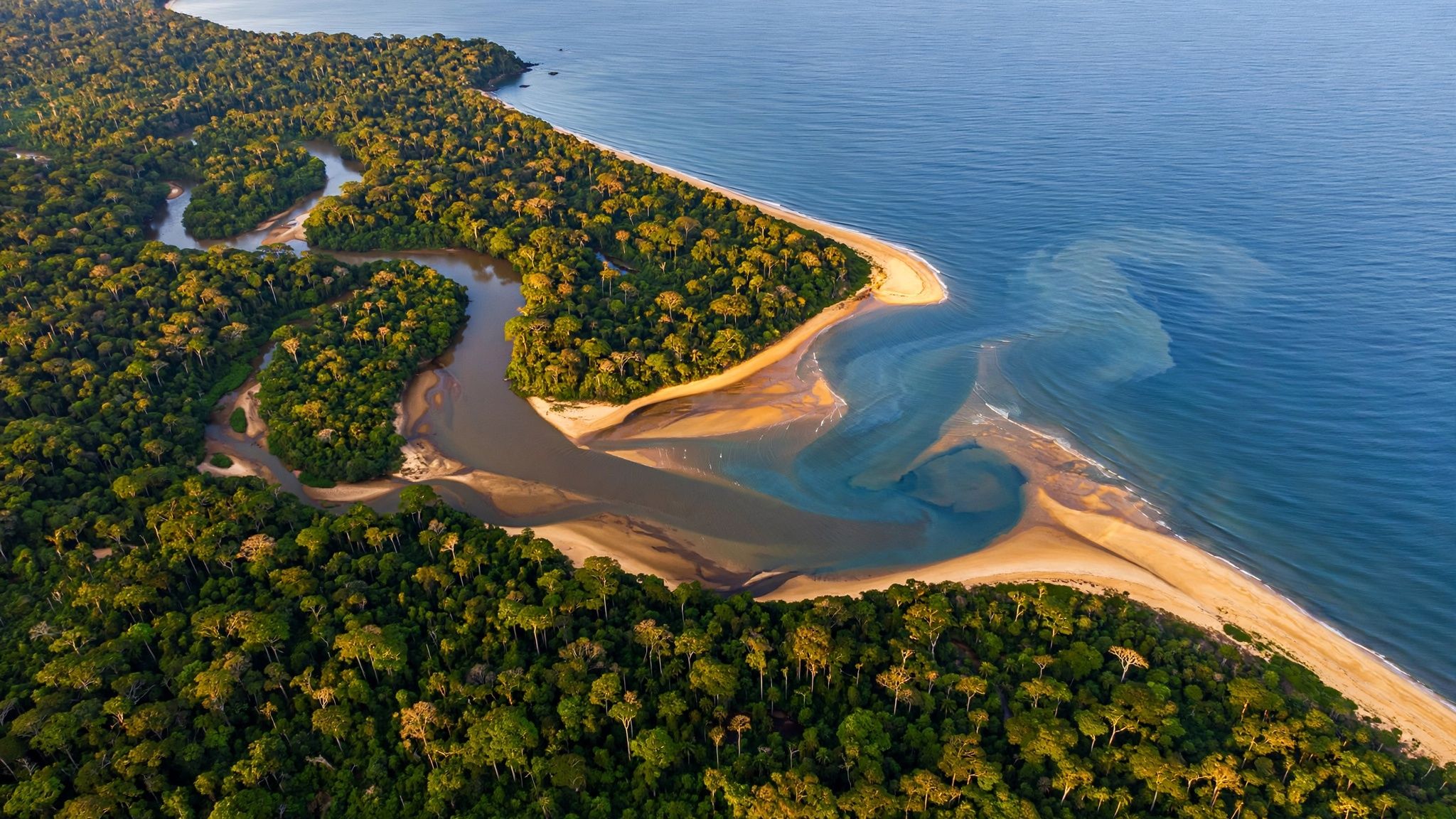
Kribi · Cameroon
Forging Cameroon’s industrial future.
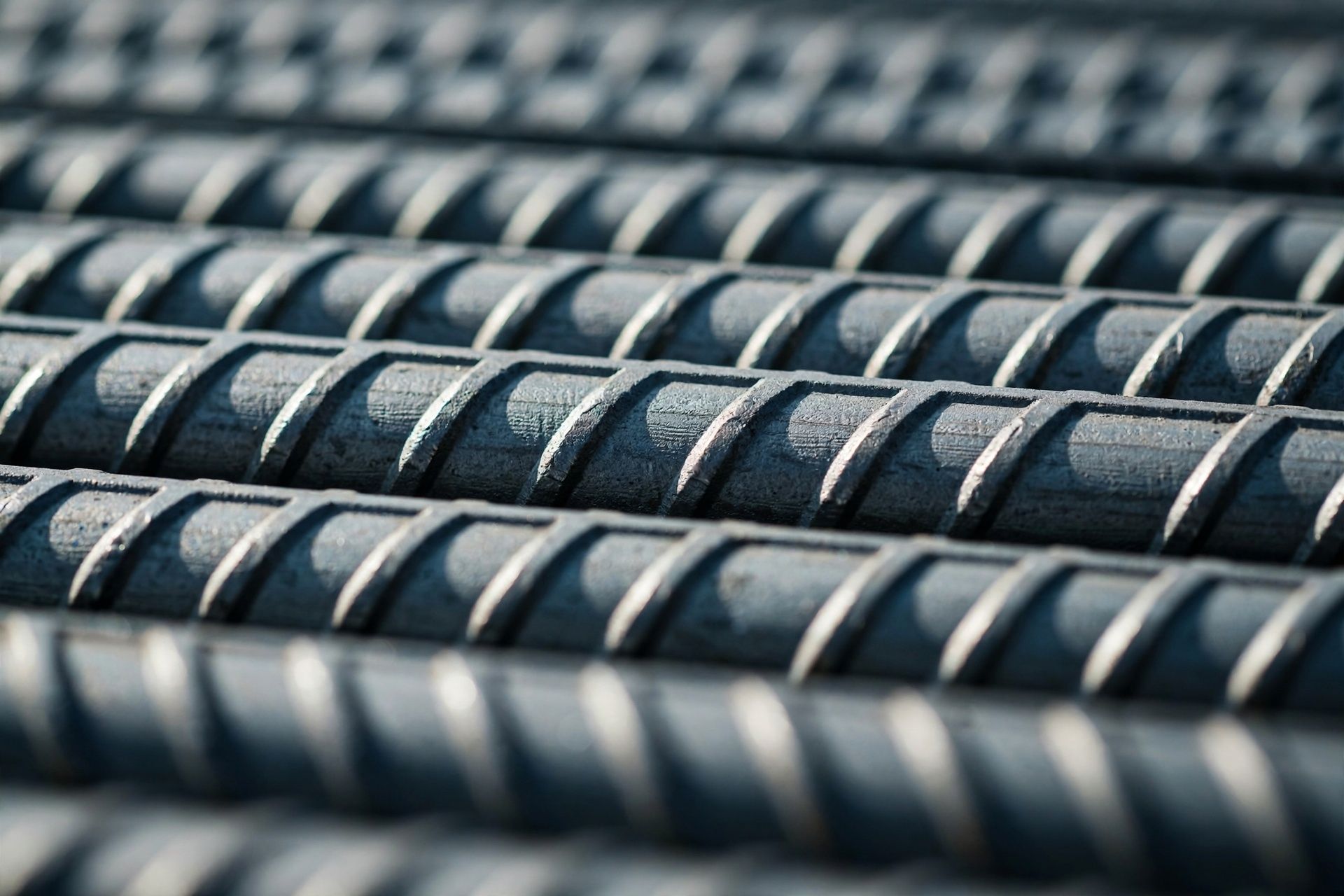
In Kribi, Cameroon Steel is preparing an electric steelworks that will first melt scrap and imported reduced iron into certified reinforcing bar. In time, a direct-reduction unit would let it process Cameroonian ore there: from mineral resource to industrial value.
Our purpose
Cameroon has the ore. Value is created by transforming it.
Today most Cameroonian iron is not processed in the country, and the market imports its billets, flat products and sections. Cameroon Steel plans to build, step by step, the chain that links the resource to the building site.
1Mt/yr
Target design capacity, built in phases
Source
Cameroon Tribune, « Industrialisation : la voie royale de l’émergence », 2 Jan 2025
0.3Mt/yr
Planned first phase: reinforcing bar and wire rod
Source
Cameroon Steel reference configuration RC-1 (edition 10 Oct 2026): planning assumption, subject to engineering and permits
30December 2024
Foundation stone laid at Mboro by the Prime Minister, representing the Head of State
Source
Cameroon Tribune, « Kribi : le Premier ministre, chef du gouvernement est là », 30 Dec 2024
15%
Minimum share of mine output for local processing (2023 Mining Code, art. 40(4))
Source
Loi n° 2023/014 du 19 décembre 2023 portant Code minier, art. 40(4)
The transformation
From resource to value, in six states of matter.
Each stage changes the nature of the metal and its value. The project starts with the electric melt shop and rolling, then moves up the chain towards Cameroonian iron.
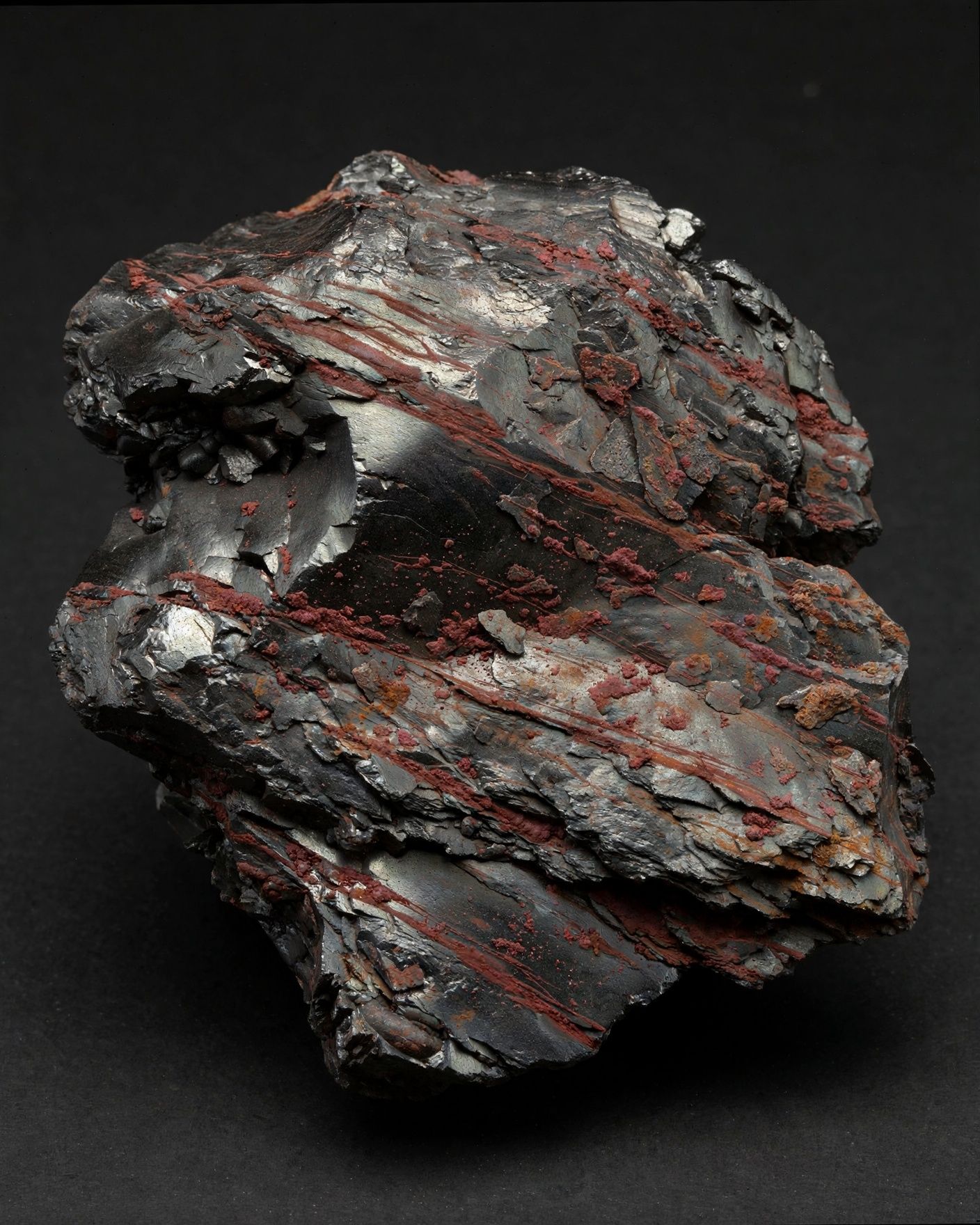
01
Ore
Cameroonian hematite, among the largest iron deposits in Central Africa, is today destined for export as raw ore.
Resource · ambient temperature
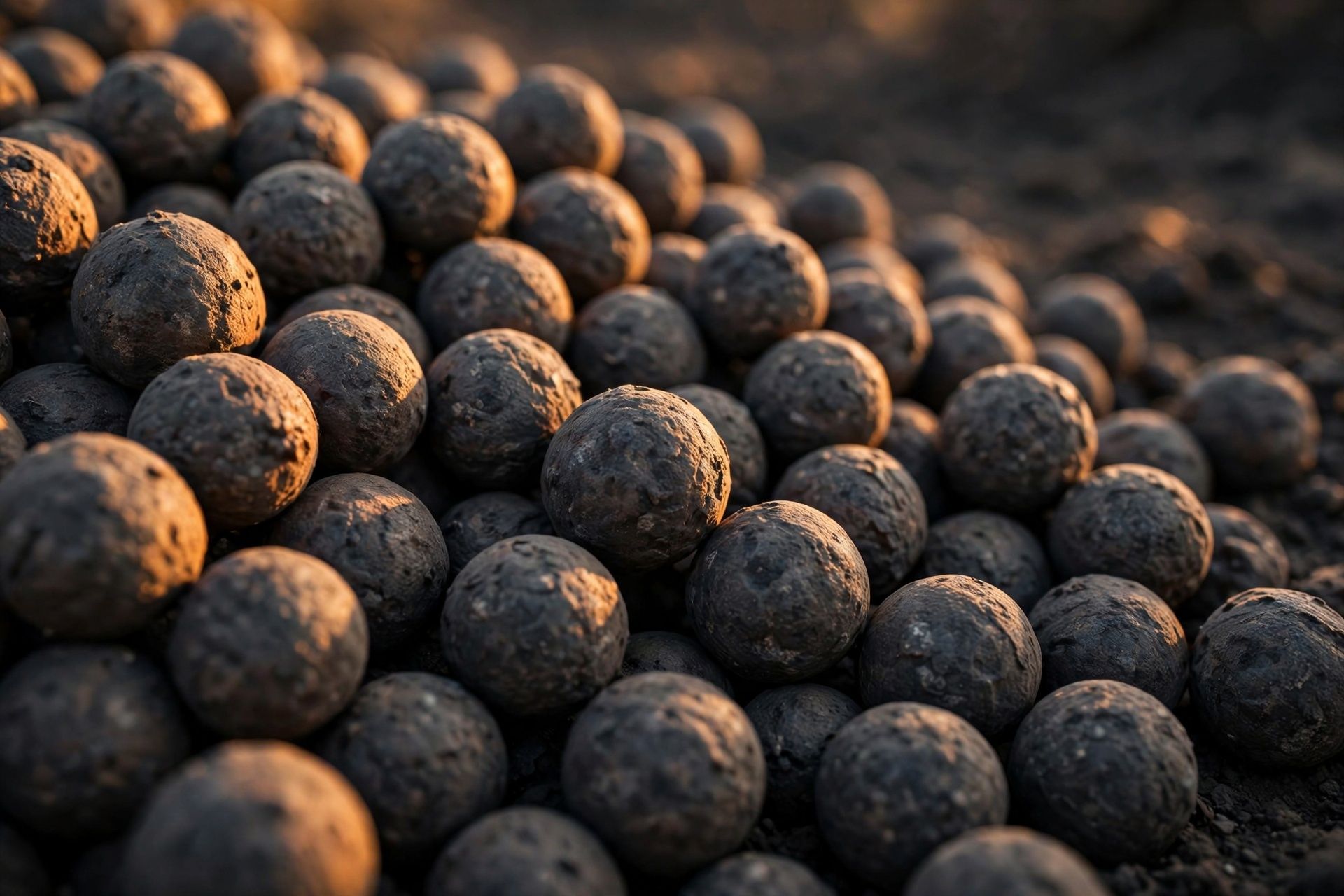
02
Direct-reduced iron
Concentrated and reduced, the ore becomes a clean metallic charge. In time, a direct-reduction unit could process Cameroonian ore on site.
Long-term option · around 900 °C
- Visualisation
03
Liquid steel
The electric arc furnace melts scrap and reduced iron; the ladle furnace refines the grade. This is the heart of the first phase.
Electric melt shop · around 1,600 °C
- Visualisation
04
Billet
Continuous casting solidifies the steel into billets, the semi-finished product Cameroon imports most today.
Continuous casting · cooling
- Visualisation
05
Rolling
Reheated, the billet passes through the mill stands and becomes reinforcing bar, wire rod, then sections.
Hot rolling · around 1,100 °C
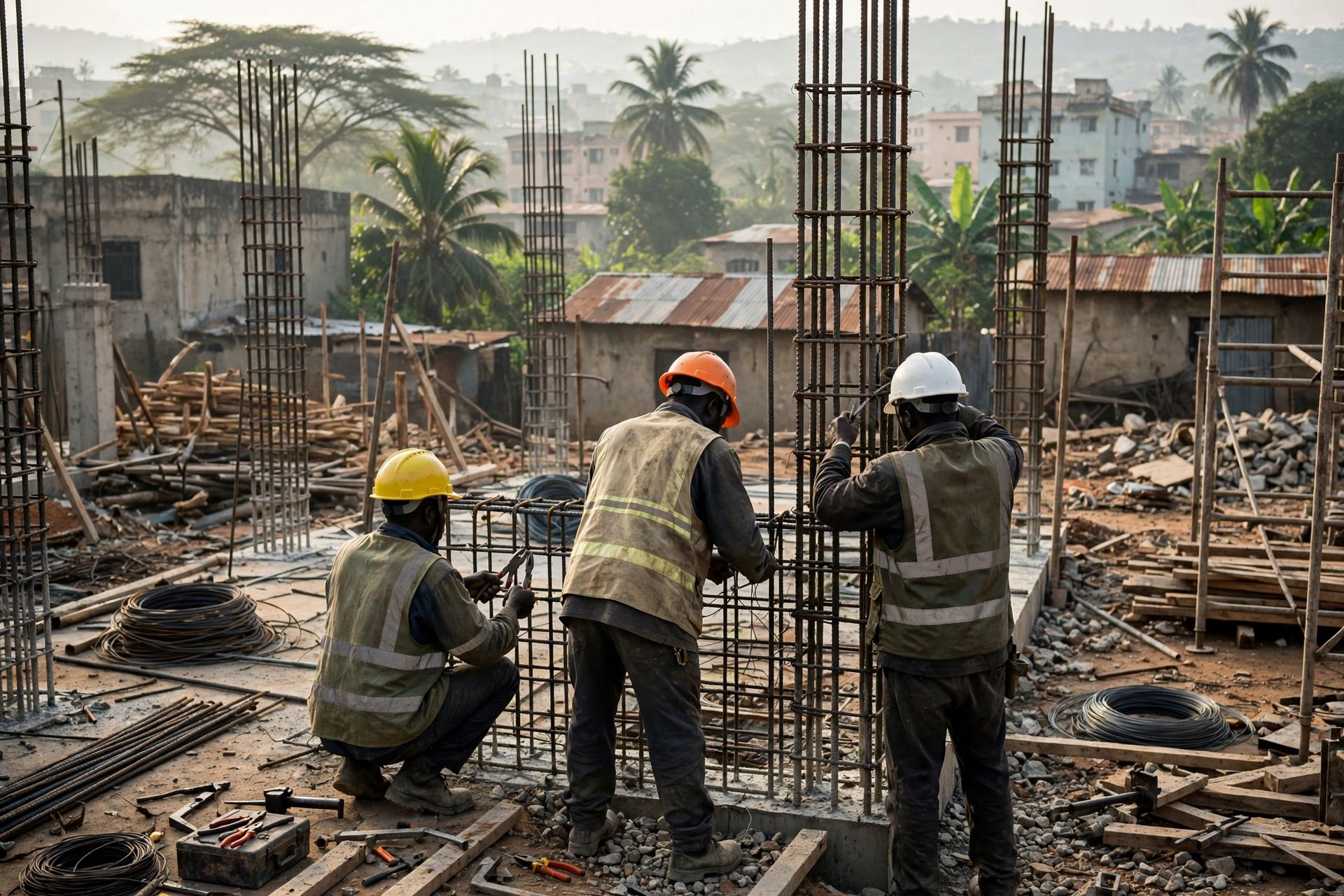
06
Structures
Certified products reinforce the homes, bridges, roads and factories of Cameroon and the sub-region.
Structure · decades of service life
The diagnosis
The gap is upstream: iron, billets, sections.
Cameroon uses about 15 to 20 kg of steel per person, depending on the population count (15 kg on the World Bank’s 2025 estimate, about 20 kg on the provisional 2026 census), against 29.2 kg for Africa. It mostly imports semi-finished and finished products it does not yet make.
412,049t
Cameroon imports of iron and steel (HS chapter 72) in 2025
Source
INS Cameroun, Évolution du commerce extérieur en 2025 (version provisoire), Feb 2026
ins-cameroun.cm/wp-content/uploads/2026/04/Note-sur-le-comme
161kt
Billets imported in 2023, the largest steel import (78% from Indonesia)
Derived worldsteel, World Steel in Figures 2026 (Africa, world); Cameroon: industry estimate (about 450 kt) divided by population, 29.9 million on the World Bank’s 2025 estimate and 22.7 million on the provisional results of the 2026 census (Journal du Cameroun, 5 October 2026).
Kribi
A deep-water port, an industrial zone, a 225 kV line.
The complex is being developed at Mboro, within the Kribi industrial-port zone. The port, power and planned corridors make it the natural anchor for steel serving national and regional markets.
12.7Mt
Port of Kribi traffic in 2025, with 555,398 TEU
Source
EcoMatin, « Au Cameroun, le port de Kribi revendique la place de premier terminal à conteneurs », 22 Apr 2026 (PAK figures)
ecomatin.net/au-cameroun-le-port-de-kribi-revendique-la-plac
100 → 400MW
Kribi 225 kV line and substation capacity: 100 MW initially, 330 to 400 MW later
Source
Port Autonome de Kribi, communiqués of 6 Aug 2025 and 19 Aug 2026 (site visit by the Minister of Water and Energy)
~4,000ha
Kribi industrial-port zone, developed by KPIZ S.A. (launched on 26 February 2026)
Source
Investir au Cameroun, 20 Feb 2026 and 4 Mar 2026
www.investiraucameroun.com/gestion-publique/0403-23163-zone-
- Project site (indicative)
- Port and industrial areas
- Roads and motorway
- Rivers and coastline
- Protected-area boundary
Climate
Electric steel, on a hydro-dominated grid.
The electric route emits far less than the blast furnace. On Cameroon’s grid, indicative intensity would be about 0.58 t CO₂ per tonne including upstream imported reduced iron, the closest basis to route averages (Scopes 1 and 2 alone: about 0.32 t in Phase 1, 0.33 t at full build-out).
Sourced worldsteel, Sustainability Indicators 2025 (2024 data) · Derived RC-1: IFC ranges for the furnace and rolling, RC-1 assumptions for induction heating, auxiliaries, direct emissions and imported iron, with the Cameroon grid factor (226 g/kWh). Values in t CO₂ per tonne of steel
Dated, sourced updates
What happened, dated and sourced.
Cameroon Steel publishes a series of ten white papers on steel in Cameroon
Market, technology, energy, climate, skills and quality: ten sourced studies to inform the building of a steel value chain in Cameroon.
Source: Cameroon Steel
Memorandum of understanding for the Édéa–Kribi–Lolabé–Campo railway
The Government and partners signed a memorandum covering the studies, financing, construction and operation of a line of about 185 km serving Kribi.
Source: Port Autonome de Kribi, communiqué, 4 Jun 2026
The Kribi steel complex is reported on the Port Autonome de Kribi’s inspection tour
According to one press report, the tour of 7 to 9 April 2026 by the Director General of the Port Autonome de Kribi included, for the mining sector, the “modern steel complex of Kribi”. We report this without having verified it with the port.
Source: Bougna.net, 8 Apr 2026
Library and Labs
Ten white papers. Ten tools. Every figure has its source.
Market, technology, energy, climate, skills, quality: go deeper into each subject, or calculate for yourself.
- 01Value chainFrom ore to steel
- 02Site and logisticsKribi as a steel platform
- 03TechnologyChoosing the route
- 04MarketSteel demand
- 05EnergyPower and gas
- 06ClimateLower-carbon steel
- 07Environment and societyBuilding responsibly
- 08SkillsSkills for steel
- 09EconomicsThe economics of domestic steel
- 10QualityQuality steel
- Value-chain explorerHow many tonnes go in and out at each stage, from ore to finished product?
- Steel route labWhich steelmaking route uses the least energy and emits the least CO₂?
- Rebar estimatorHow much steel does my building need, and in which bar sizes?
- Carbon and CBAM calculatorWhat is the footprint of a tonne of steel, and what would it cost at the EU border?
- Import-substitution simulatorWhat share of steel imports could local production replace?
- Jobs impactHow many direct, indirect and induced jobs by phase?
- Logistics simulatorHow many ships, trucks and trains does the plant need?
- Power demandHow much electricity does an electric steelworks need, hour by hour?
- Careers pathfinderWhich steel career suits me, and which training should I follow in Cameroon?
- Project timelineWhat is verified, what is planned, and when?
Let us build the steel value chain together.
Institutions, financial partners, customers, suppliers, talent: let us talk about your role in the project.
Get in touch