Contact

Language

From mineral resource to industrial value

Company and project

A steelworks for Kribi, built in phases.

Cameroon Steel SARL is developing a steel complex at Mboro, in the Kribi industrial-port zone.

Foundation stone: 30 Dec 2024

Arc furnace and ladle furnace

Billet caster

Bar and wire-rod mills

Second melt line

Sections mill

Melt-shop expansion

Beam mill

Option: direct reduction

IllustrativeSchematic, not to scale: neither a site plan nor a design drawing. Nothing is built yet.
Assemble the works, phase by phase

Verified

8 dated, sourced facts and 2 press reports since 19 Dec 2023

On the left, verified facts; on the right, planned steps. The full timeline is further down the page.

TodayVerified

0Mt/yr

built to date

In development

Stage of the project: nothing is built yet. Site surveys, the impact assessment, engineering and financing are still ahead

30 Dec 2024Verified

Foundation stone laid at Mboro

Source: Cameroon Tribune, 30 Dec 2024 and 2 Jan 2025

5 planned steps before the first heat

Cumulative capacityAssumption

0.3Mt/yr

of finished products; this phase adds +0.3 Mt/yr

Electric melt shop, reinforcing bar and wire rod

Installs
Electric arc furnace, ladle furnace, billet caster, induction heating, bar mill, wire-rod mill
Makes
Reinforcing bar Ø8 to 32 mm; wire rod Ø5.5 to 12 mm
H2 2030Objective

Phase 1: first heat

Hot commissioning and first heat, then ramp-up in 2031 towards the nameplate capacity of 0.3 Mt/yr of reinforcing bar and wire rod.

Cumulative capacityAssumption

0.5Mt/yr

of finished products; this phase adds +0.2 Mt/yr

Light and medium sections

Installs
Second melt line (furnace, ladle furnace, caster), sections mill
Makes
Angles, channels, flats
2032–2034Indicative

Phase 2: sections, to 0.5 Mt/yr

Angles, channels and flats from a second melt line and a sections mill, subject to market and financing.

Cumulative capacitySourced

1Mt/yr

of finished products; this phase adds +0.5 Mt/yr

H-beams and heavy sections, to 1 Mt/yr

Installs
Melt-shop expansion, beam mill
Makes
H- and I-beams, heavy sections
After 2034Indicative

Phase 3: heavy sections, to 1 Mt/yr

H- and I-beams and heavy sections, with the melt-shop expansion, subject to market and financing.

Option: direct reduction. Later: long-term option, no date.

Choose a stage, or use the arrow keys.

Cameroon Steel SARL is developing a steel complex at Mboro, in the Kribi industrial-port zone. Its design capacity is one million tonnes a year, reached in three phases, starting with an electric melt shop and a mill for reinforcing bar and wire rod.

1Mt/yr

Target design capacity, built in phases

Source

Cameroon Tribune, « Industrialisation : la voie royale de l’émergence », 2 Jan 2025

cameroon-tribune.cm/article.html/68558/fr.html/details_2

0.3Mt/yr

Planned first phase: reinforcing bar and wire rod

Source

Cameroon Steel reference configuration RC-1 (edition 10 Oct 2026): planning assumption, subject to engineering and permits

30December 2024

Foundation stone laid at Mboro by the Prime Minister, representing the Head of State

Source

Cameroon Tribune, « Kribi : le Premier ministre, chef du gouvernement est là », 30 Dec 2024

cameroon-tribune.cm/article.html/68499/fr.html/details_2

15%

Share of Mbalam output that Cameroon Mining Company’s convention is reported to provide for local transformation; the same report presents Cameroon Steel as the future national steel hub of the Mbalam programme

Source

Camer.be via AllAfrica, « Cameroon Mining Company confirme l’entrée du projet Mbalam dans sa phase irréversible d’exécution », 12 Dec 2025

fr.allafrica.com/stories/202512120475.html

Who we are

A Cameroonian company whose business is transformation.

Cameroon Steel SARL is a company incorporated under Cameroonian law to build and operate a steel complex in the Kribi industrial-port zone. Its purpose is narrow and demanding: turn iron units into steel products that meet recognised standards, close to a deep-water port, a 225 kV power supply and the country’s largest building sites.

The project belongs to a group of industrial interests built around Cameroonian iron ore. Its sister company, Cameroon Mining Company, holds the exploitation permit for the Mbalam iron-ore deposit in the east of the country. Its mining convention is reported to provide for 15% of Mbalam’s output to be transformed locally. The same press report presents Cameroon Steel as the future national steel hub of that programme; it does not say that the convention names the company. If confirmed, the 15% provision would give the steelworks a long-term route to domestic ore; it does not make that ore available tomorrow, and the first phase is designed not to depend on it.

We are at the development stage. The foundation stone was laid on 30 December 2024; site surveys, the environmental and social impact assessment, front-end engineering and financing come next. Until they are complete, every capacity, date and quantity on this site is a plan, and is presented as one.

Where the project sits

From the Gulf of Guinea to Mboro, in five moves.

In five steps, the map moves from the scale of Cameroon to the Kribi site. Solid lines exist today; dashed orange lines are proposed. The site is shown only by a marker and, at Kribi scale, by an indicative area of 1.5 km radius.

Gulf of Guinea

The coast that connects Central Africa

Cameroon’s coastline opens onto the Gulf of Guinea, the maritime front of a region that imports most of its steel. Two ports carry the country’s sea trade: Douala, on the Wouri estuary, and Kribi, the deep-water port further south.

  • Kribi handled 12.7 Mt and 555,398 TEU in 2025 and claims the rank of the country’s largest container terminal (PAK figures).

Cameroon

A market that imports its iron

Cameroon imported 412,049 t of iron and steel in 2025, more than twice its 2019 tonnage. The country already rolls rebar; what it lacks is the iron and the billets that feed its mills.

  • Billets: 161 kt imported in 2023, the largest steel import, 78% from Indonesia.
  • Local scrap: about 40% of mill feedstock needs.

The mining east

The ore is in the east, the market on the coast

The Mbalam deposit lies near the border with the Republic of the Congo, about 500 km from Kribi. Cameroon Mining Company holds its exploitation permit; a Mbalam–Kribi railway has been contracted as a public-private partnership but is not built.

  • Cameroon has 64 Mt/yr of iron-ore mine capacity in development, the world’s fourth-largest pipeline.
  • Mbalam–Kribi railway: about 510 km, proposed.

Kribi

A port, a zone, a power line

Kribi combines a 16 m deep quay, an industrial zone of about 4,000 ha now developed by KPIZ S.A., and a 225 kV line and substation due to supply 100 MW at first, then 330 to 400 MW. A coastal Édéa–Kribi–Lolabé–Campo railway is at memorandum stage.

  • 225 kV line and 225/30 kV substation: commissioning announced for the end of 2026.
  • Coastal railway: about 185 km, memorandum signed on 4 June 2026.

Mboro

The site: close to the port, back from the shore

The complex is planned at Mboro, inland of the deep-water port, within the industrial-port zone. We publish only an indicative area of 1.5 km radius, not a boundary. Measured from the centre of that area, the site is about 3 to 4 km from the port frontage and about 12 km from the boundary of the marine national park; the impact assessment will cover the coast, the Lobé river and that park.

  • OpenStreetMap data (ODbL), extract of 24 July 2026; distances are indicative.
Gulf of GuineaCameroonNigeriaChadCentral African RepublicGabonRepublic of the CongoEquatorial GuineaYaoundéDoualaÉdéaNgaoundéréMbalam region (indicative)KribiLolabéCampoDeep-water portProject site, Mboro (indicative)Project site, Mboro (indicative)Project site, Mboro (indicative area)Project site, Mboro (indicative area)Marine park (boundary)
  • Existing (schematic alignment)
  • Proposed
  • Project site (indicative)
  • Ore region (indicative)
Map: Natural Earth 1:50m; Kribi area © OpenStreetMap contributors (ODbL). Mercator projection. Railway alignments are schematic.

Timeline

What has happened, and what is planned.

Verified milestones carry a dated source. Planned steps are objectives: they depend on permits, engineering, the market and financing, and they will move if those do.

  1. 19 Dec 2023VerifiedThe Mining Code sets local transformationLoi n° 2023/014 du 19 décembre 2023 portant Code minier
  2. 30 Dec 2024VerifiedFoundation stone laid at MboroCameroon Tribune, 30 Dec 2024 and 2 Jan 2025
  3. 6 Aug 2025VerifiedKribi 225 kV line launchedPort Autonome de Kribi, « Kribi franchit la ligne électrique 225 kV », 6 Aug 2025
  4. 10 Dec 2025VerifiedA committee for mines–metallurgy integrationEcoMatin, 16 Apr 2026
  5. 12 Dec 2025ReportedMbalam and the 15% local transformationCamer.be via AllAfrica, 12 Dec 2025
  6. 26 Feb 2026VerifiedKPIZ S.A. is launched, with a steel clusterInvestir au Cameroun, 4 Mar 2026
  7. 7–9 Apr 2026ReportedThe complex is reported on the port’s inspection tourBougna.net, 8 Apr 2026
  8. 4 Jun 2026VerifiedMemorandum for the Édéa–Kribi–Lolabé–Campo railwayPort Autonome de Kribi, communiqué, 4 Jun 2026
  9. 19 Aug 2026VerifiedMinister visits the 225/30 kV substationPort Autonome de Kribi, « Énergie et infrastructures : un nouvel élan… », 19 Aug 2026
  10. 10 Oct 2026VerifiedTen white papers publishedCameroon Steel
  11. End 2026PlannedAnnounced commissioning of the 225 kV linePort Autonome de Kribi, communiqués of 6 Aug 2025 and 19 Aug 2026 (site visit by the Minister of Water and Energy)
  12. First half 2027ObjectiveSite surveys and environmental scopingCameroon Steel, reference configuration RC-1 (edition 10 Oct 2026)
  13. 2027ObjectiveFront-end engineering for Phase 1Cameroon Steel, reference configuration RC-1 (edition 10 Oct 2026)
  14. 2027–2028ObjectiveTwo-season impact study and public hearingsCameroon Steel, reference configuration RC-1 (edition 10 Oct 2026)
  15. Late 2028 to Q1 2029ObjectiveFinancing, then start of Phase 1 works after the environmental certificateCameroon Steel, reference configuration RC-1 (edition 10 Oct 2026)
  16. H2 2030ObjectivePhase 1: first heatCameroon Steel, reference configuration RC-1 (edition 10 Oct 2026)
  17. 2032–2034IndicativePhase 2: sections, to 0.5 Mt/yrCameroon Steel, reference configuration RC-1 (edition 10 Oct 2026)
  18. After 2034IndicativePhase 3: heavy sections, to 1 Mt/yrCameroon Steel, reference configuration RC-1 (edition 10 Oct 2026)
  19. LaterIndicativeOption: direct reduction of Cameroonian oreCameroon Steel, reference configuration RC-1 (edition 10 Oct 2026)

The full timeline in Labs →

The phased project

One million tonnes, in three phases.

Each phase adds a product family the market imports or cannot find, and each starts only when the previous one is running, financed and permitted.

Cumulative capacity, Mt/yr of finished products

  1. Phase 12030

    +0.3 Mt/yr → 0.3

    Electric melt shop, reinforcing bar and wire rod

    Reinforcing bar Ø8 to 32 mm; wire rod Ø5.5 to 12 mm

    Electric arc furnace, ladle furnace, billet caster, induction heating, bar mill, wire-rod mill

    Assumption
  2. Phase 22032–2034

    +0.2 Mt/yr → 0.5

    Light and medium sections

    Angles, channels, flats

    Second melt line (furnace, ladle furnace, caster), sections mill

    Assumption
  3. Phase 3after 2034

    +0.5 Mt/yr → 1

    H-beams and heavy sections, to 1 Mt/yr

    H- and I-beams, heavy sections

    Melt-shop expansion, beam mill

    Assumption
  4. Option: direct reduction

    A direct-reduction module could turn Cameroonian ore into reduced iron, if a direct-reduction-grade concentrate, gas and approvals come together.

    Indicative
Planned capacity build-up, RC-1 reference configuration. Target dates and indicative capacities. Source: Cameroon Steel, RC-1 reference configuration, 10 October 2026; design capacity: Cameroon Tribune, 2 January 2025
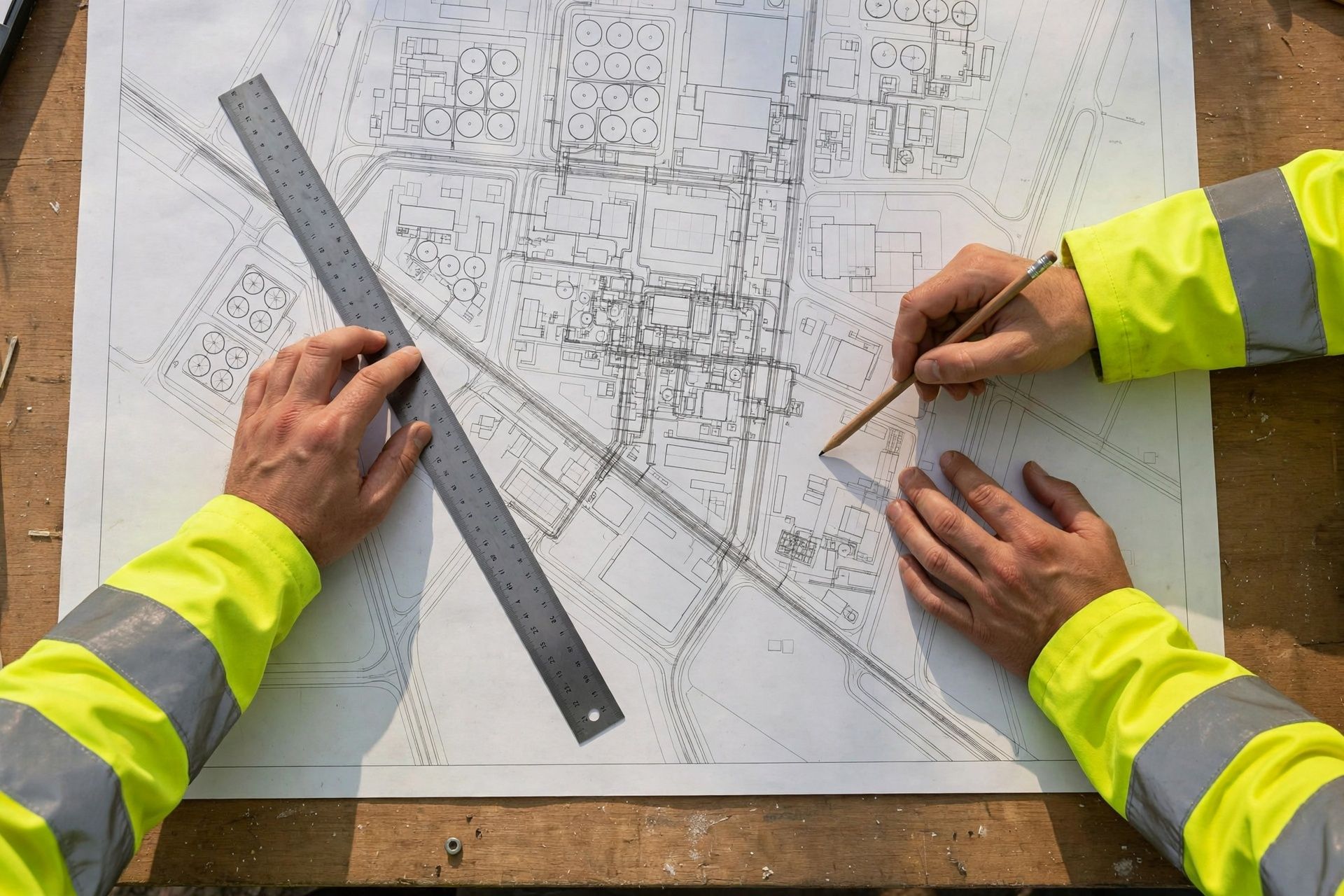
Visualisation: engineers studying a drawingVisualisation

Why start with the furnace, not the mine?

An electric arc furnace runs from day one on scrap and imported reduced iron; it waits for neither a 500 km railway nor a pellet plant. It comes in lines of a few hundred thousand tonnes, the size of the Cameroonian market, and it emits far less than a blast furnace on a hydro-dominated grid.

The reverse step, turning national ore into reduced iron, needs a direct-reduction-grade concentrate, reliable natural gas and its own approvals. We reserve the land and the option; we do not promise a date.

+0.2Mt/yr

Planned second phase: angles, channels and flats

Source

RC-1 reference configuration, Phase 2 (150 to 200 kt/yr range); indicative, subject to market and financing

+0.5Mt/yr

Planned third phase: H-beams and heavy sections, reaching 1 Mt/yr

Source

RC-1 reference configuration, Phase 3; indicative, subject to market and financing

The process in detail →

The project’s role

What the project changes.

  1. For the market

    Make at home the iron units, billets and sections that the country’s processors and building sites import today.

    161kt

    Billets imported in 2023, the largest steel import (78% from Indonesia)

    Source

    UN Comtrade, Cameroon (reporter 120), HS 7207, 2023

    comtradeapi.un.org/

  2. For the ore

    Give the local-transformation obligation of the Mining Code, and the one reported for the Mbalam convention, its first industrial customer.

    15%

    Minimum share of mine output for local processing (2023 Mining Code, art. 40(4))

    Source

    Loi n° 2023/014 du 19 décembre 2023 portant Code minier, art. 40(4)

  3. For Kribi

    Anchor the “steelmaking linked to mineral exports” cluster of the Kribi industrial-port zone, in the area served by the port and the 225 kV substation.

    ~4,000ha

    Kribi industrial-port zone, developed by KPIZ S.A. (launched on 26 February 2026)

    Source

    Investir au Cameroun, 20 Feb 2026 and 4 Mar 2026

    www.investiraucameroun.com/gestion-publique/0403-23163-zone-

Governance

How we intend to work.

These are commitments, not achievements: we will report on how we meet them, phase by phase.

Visualisation
  1. Truth before promotion

    Every figure we publish carries a status and a source; plans are presented as plans. We correct our errors in public.

    Commitment
  2. Standards from design

    IFC Performance Standards and the World Bank Group EHS Guidelines, alongside Cameroonian law, from the impact assessment onward.

    Commitment
  3. Decisions in stages

    Each phase is committed only when its market, financing, permits and power supply are confirmed.

    Commitment
  4. Integrity

    Zero tolerance of corruption, competitive procurement, and conflicts of interest declared by directors and staff.

    Commitment
  5. Cameroon first

    Cameroonian recruitment, training before start-up, local suppliers wherever quality allows; objective: about 90% nationals in operations by year five.

    Commitment
  6. An open door

    A grievance mechanism for neighbours and workers, and regular public reporting from construction onward.

    Commitment

What we do not know yet

The unknowns, and what will resolve them.

  • The final configuration of Phase 1front-end engineering, target 2027
  • The environmental and social baselinetwo seasons of fieldwork, 2027–2028
  • Power and water supply contractsnegotiated during engineering
  • The financing structureclose targeted for late 2028 or early 2029, before works start
  • When direct-reduction-grade Cameroonian ore will existdepends on mining projects and gas