The Kribi site
Where deep water meets the industrial zone.
Cameroon Steel’s steel complex is being developed at Mboro, south of Kribi, within the Kribi industrial-port zone. A deep-water port, organised land, a 225 kV power line and planned corridors: that is what a steelworks needs to receive its materials and ship its products.
Why Kribi
- Deep waterSourced
16 m
Depth at the quay of the Kribi deep-water port (Mboro)
- PowerSourced
100 → 400 MW
Kribi 225 kV line and substation capacity: 100 MW initially, 330 to 400 MW later. The line is not drawn on this map.
- Organised landSourced
~4,000 ha
Kribi industrial-port zone, developed by KPIZ S.A. (launched on 26 February 2026)
- DistancesDerived
3 to 4 km
to the nearest mapped village (Boussibelika), from the centre of the indicative area of 1.5 km radius; rings at 2 and 5 km
Why Kribi
A steelworks lives on what comes in and what goes out.
An electric steelworks receives hundreds of thousands of tonnes of scrap and direct-reduced iron every year, then ships bars, wire rod and sections to building sites. Every kilometre those tonnes travel adds cost. Siting the plant a few kilometres from a deep-water port keeps those distances to a minimum.
In 2025 the Port of Kribi handled 12.7 million tonnes, up 19% on 2024, and 555,398 twenty-foot equivalent units. The industrial zone around it, now developed by Kribi Port Industrial Zone (KPIZ) S.A., already hosts cement plants and processing industries, and lists steelmaking linked to mineral exports among its priority clusters.
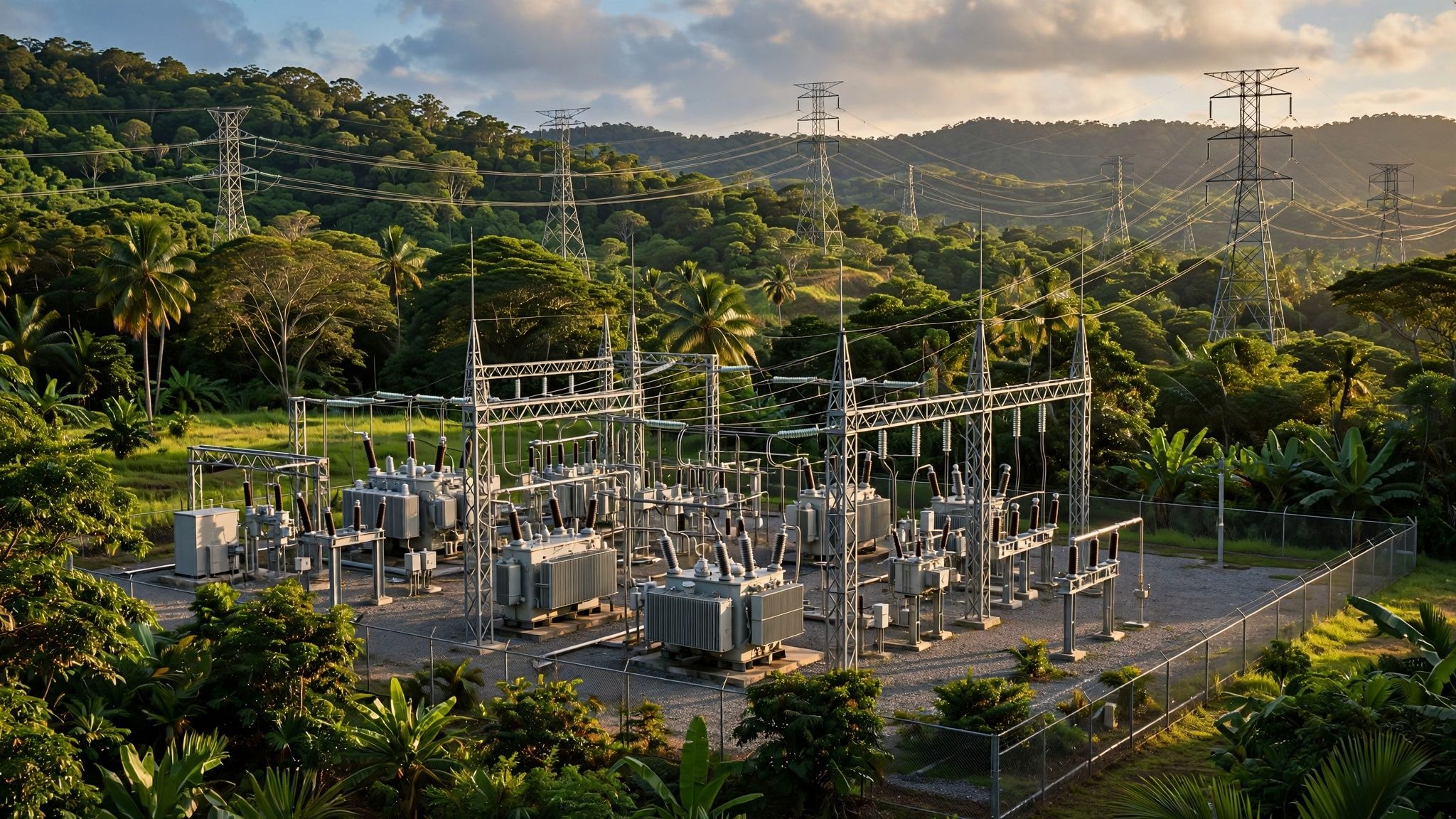
Electricity is the invisible raw material of an electric steelworks. The 225 kV line from the Kribi gas power plant to the port, with its substation, is to supply 100 MW initially, then 330 to 400 MW. A water plant dedicated to the port platform is planned for early 2027.
Sourced Sources: EcoMatin, 22 April 2026 (PAK figures); Investir au Cameroun, 20 February and 4 March 2026; Port Autonome de Kribi, communiqués of 6 August 2025 and 19 August 2026.
12.7Mt
Port of Kribi traffic in 2025, with 555,398 TEU
Source
EcoMatin, « Au Cameroun, le port de Kribi revendique la place de premier terminal à conteneurs », 22 Apr 2026 (PAK figures)
ecomatin.net/au-cameroun-le-port-de-kribi-revendique-la-plac
100 → 400MW
Kribi 225 kV line and substation capacity: 100 MW initially, 330 to 400 MW later
Source
Port Autonome de Kribi, communiqués of 6 Aug 2025 and 19 Aug 2026 (site visit by the Minister of Water and Energy)
~4,000ha
Kribi industrial-port zone, developed by KPIZ S.A. (launched on 26 February 2026)
Source
Investir au Cameroun, 20 Feb 2026 and 4 Mar 2026
www.investiraucameroun.com/gestion-publique/0403-23163-zone-
Explore the area
The site, its neighbours, its distances.
Switch layers on or off. The project area is indicative (1.5 km radius): no boundary is published at this stage. Distances, in one-kilometre bands, are measured in a straight line from its centre; journeys by road are longer.
In short
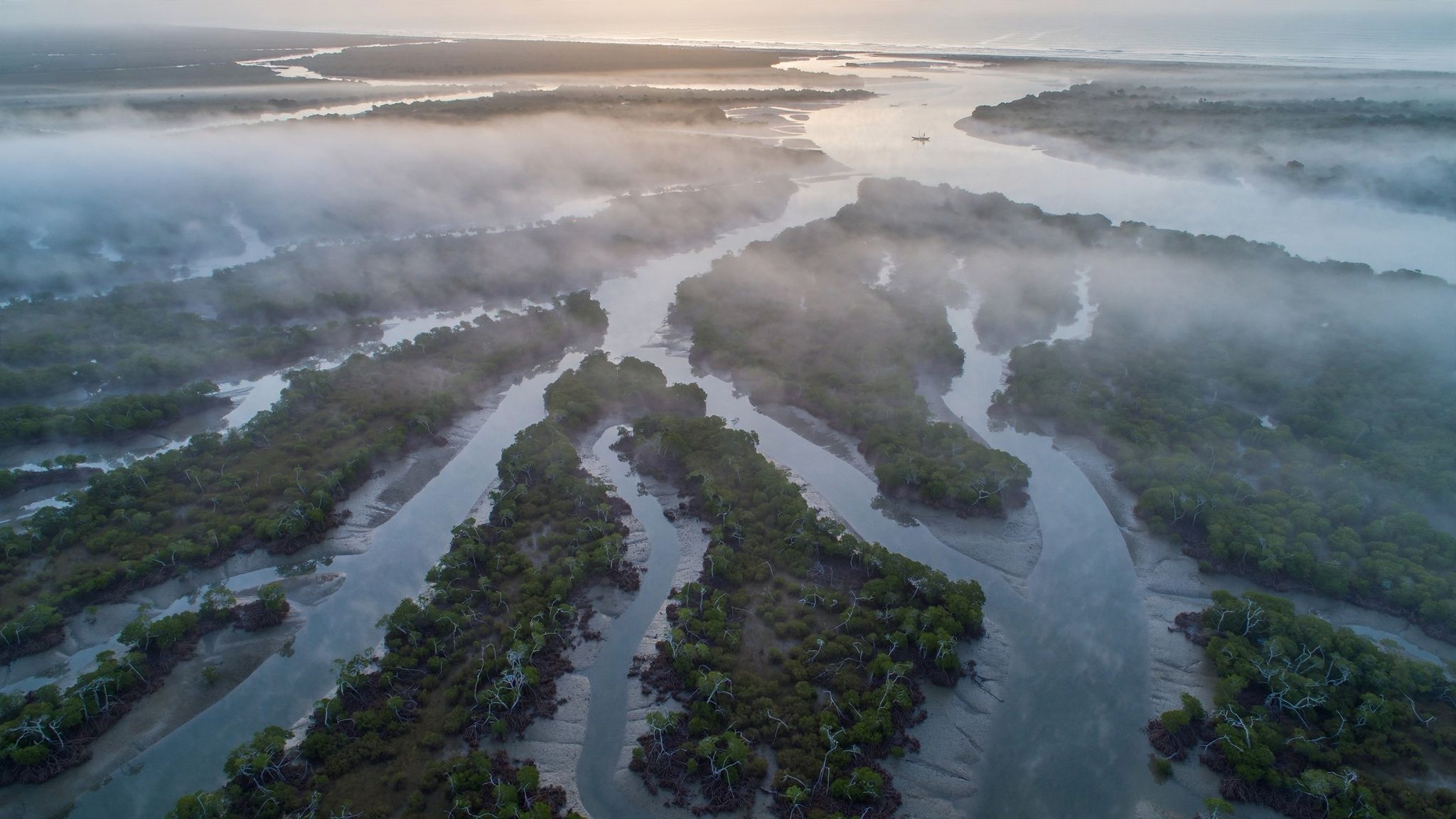
The site lies inland, a few kilometres from the coast and the deep-water port, in the industrial zone served by the Kribi–Lolabé motorway. Measured from the centre of the indicative area, the coast at the port frontage is 3 to 4 kilometres away and, according to OpenStreetMap, the nearest villages, Boussibelika, Mbodé and Mboro, are about three to five kilometres away; a field census will precede any development. The Manyange na Elombo-Campo marine national park lies about 12 kilometres to the south.
- Boussibelika3–4 km
- Mbodé4–5 km
- Mboro4–5 km
- Nlendé Dibé6–7 km
- Lolabé6–7 km
- Lohendje8–9 km
- Eboundja I8–9 km
Infrastructure
What the zone is putting in place, and when.
- In service
Port
Container terminal, multipurpose terminal and mineral-terminal plans; 16 m of draught at the quay.
- Under construction
Power
225 kV line and 225/30 kV substation: 100 MW initially, 330 to 400 MW later; commissioning planned for the end of 2026.
- Under construction
Water
Water production plant for the port platform, planned for early 2027.
- Proposed
Rail
Memorandum of 4 June 2026 for the Édéa–Kribi–Lolabé–Campo line (about 185 km).
- Under way
Zone
KPIZ S.A., launched on 26 February 2026, is developing about 4,000 ha with a one-stop shop for investors.
Sourced Sources: Port Autonome de Kribi, Guide du Port de Kribi (August 2020) and communiqués of 6 August 2025, 4 June 2026 and 19 August 2026; Investir au Cameroun, 20 February 2026. Statuses and dates as announced by these sources.
The industrial zone
A steel cluster planned by the zone itself.
KPIZ S.A., a subsidiary of the Port Autonome de Kribi with private partners, is tasked with designing, financing, developing, operating and maintaining the Kribi industrial-port zone. Its development plan organises the zone into clusters: wood processing, steelmaking linked to mineral exports, petrochemicals, agro-industry and building materials. According to the press, the African Development Bank, the European Union and the IFC are expected to finance its first phase (Ecofin Agency, 27 February 2026). For Cameroon Steel, this means fitting into a coherent whole, and the chance to work with industrial neighbours, for example to reuse steel slag in road works or cement plants.