Value chain
From ore to structures, tonne by tonne.
A steelworks is not a stand-alone factory: it is a link. Ore, energy, transport, transformation and markets form one chain, and it is the whole chain that creates value. This page describes it as it exists in Cameroon, and as it could be completed.
- Ore≈ 176 ktbehind the reduced iron; mined and reduced abroad in Phase 1
- Iron≈ 362 kt109 kt of reduced iron and 254 kt of scrap in the furnace charge
- Liquid steel≈ 319 kttapped from the arc furnace
- Billet≈ 313 ktcast without a stop, cut to length
- Bar≈ 300 ktreinforcing bar and wire rod
- Structure≈ 300 ktthe same tonnes, in buildings, bridges and port works
DerivedTonnes a year in the Phase 1 reference case: 300 kt of products, 30% reduced iron in the charge. Six states of matter, six changes in value.
1.21Mt/yr
Metallic charge (scrap and reduced iron) for 1 Mt of finished products
Source
Cameroon Steel, reference configuration RC-1 (edition 10 Oct 2026): capacities × RC-1 planning assumptions (yields 0.88 and 0.94, 30% reduced iron, 30 t trucks, 300 days); planning estimate, not a design figure
1Mt/yr
Target design capacity, built in phases
Source
Cameroon Tribune, « Industrialisation : la voie royale de l’émergence », 2 Jan 2025
412,049t
Cameroon imports of iron and steel (HS chapter 72) in 2025
Source
INS Cameroun, Évolution du commerce extérieur en 2025 (version provisoire), Feb 2026
ins-cameroun.cm/wp-content/uploads/2026/04/Note-sur-le-comme
64Mt/yr
Iron-ore mine capacity in development in Cameroon: 9% of the global pipeline, fourth after Australia, China and Guinea
Source
Global Energy Monitor, Pedal to the Metal 2026, May 2026
globalenergymonitor.org/sites/default/files/2026-05/Pedal%20
The chain as it stands
What exists, what is being built, what remains to be done.
Cameroon already has strong links: a deep-water port, rolling mills, a hydro-dominated grid. What it mostly lacks is the upstream, iron and billets, and a way to move the ore.
- Existing
- Under construction
- Planned by Cameroon Steel
- Developed or proposed by third parties
- Long-term option
- Missing link
Resource
Iron-ore deposits
Mbalam, Lobé, Bipindi–Grand Zambi, Nkout: mining projects in development by third parties, with no regular exports yet.
Developed or proposed by third parties
Domestic scrap
Covers about 40% of existing mills’ needs.
Existing
Hydro-dominated electricity
About 90% of generation in 2025 (ARSEL).
Existing
Direct-reduction-grade concentrate
Demonstrated in testwork, but no concentrator or pellet plant is planned to date.
Missing link
Transport
Kribi deep-water port
16 m quay; 12.7 Mt handled in 2025.
Existing
Kribi 225 kV line and substation
Commissioning announced for the end of 2026.
Under construction
Mbalam–Kribi railway
PPP contract signed in 2022, not built.
Developed or proposed by third parties
Édéa–Kribi–Lolabé–Campo railway
Memorandum of 4 June 2026.
Developed or proposed by third parties
Transformation
Douala melt shops and re-rollers
About 1.2 Mt/yr installed, running at about 50%: billets and scrap are scarce, and the press reports unsold stock (September 2026). For rebar, capacity far exceeds demand.
Existing
Kribi electric melt shop, Phase 1
Arc furnace, continuous casting, bar and wire-rod mills.
Planned by Cameroon Steel
Sections and beam mills
Phases 2 and 3, towards 1 Mt/yr.
Planned by Cameroon Steel
Direct-reduction module
For Cameroonian ore, if concentrate and gas come together.
Long-term option
Products
Reinforcing bar
Made locally; imports suspended since 2016.
Existing
Billets
161 kt imported in 2023: the largest steel import.
Missing link
Flat products
Hot-rolled, cold-rolled and coated: fully imported.
Missing link
Sections and heavy beams
Imported; targeted by Phases 2 and 3.
Planned by Cameroon Steel
End uses
Housing
Estimated deficit of 1.8 to 2.0 million units (CAHF, 2024).
Existing
Public infrastructure
Bridges, roads, ports, energy: construction grew 4.3% in 2025 (INS).
Existing
Industry and energy
Frames, industrial buildings, pylons, tanks.
Existing
Neighbouring markets
Cameroon already exports bars, mostly to Chad.
Existing
The flow of material
A 1 Mt/yr chain, in tonnes.
Each ribbon is as thick as its tonnage; each particle moves at a speed proportional to that tonnage. Colour follows temperature, from the white of the furnace to cooled steel. Switch between phases to watch the chain grow.
- AImported reduced iron 363 kt
- BScrap, local and imported 846 kt
- CAdditions and fluxes (balance) 20 kt
- Rebar and wire rod 300 kt
- Angles, channels, flats 200 kt
- H-beams and heavy sections 500 kt
- Slag, to aggregate 149 kt
- Dust, licensed recovery 16 kt
- Mill scale 20 kt
- Crop ends, remelted 44 kt
Flow table (tonnes per year)
| Flow | Phase 1 · 0.3 Mt/yr | Phases 1+2 · 0.5 Mt/yr | Full · 1 Mt/yr |
|---|---|---|---|
| Imported reduced iron → Arc and ladle furnaces | 109 kt | 181 kt | 363 kt |
| Scrap, local and imported → Arc and ladle furnaces | 254 kt | 423 kt | 846 kt |
| Additions and fluxes (balance) → Arc and ladle furnaces* | 6 kt | 10 kt | 20 kt |
| Arc and ladle furnaces → Liquid steel | 319 kt | 532 kt | 1,064 kt |
| Arc and ladle furnaces → Slag, to aggregate | 45 kt | 74 kt | 149 kt |
| Arc and ladle furnaces → Dust, licensed recovery | 5 kt | 8 kt | 16 kt |
| Liquid steel → Billets, cast then rolled | 319 kt | 532 kt | 1,064 kt |
| Billets, cast then rolled → Rebar and wire rod | 300 kt | 300 kt | 300 kt |
| Billets, cast then rolled → Angles, channels, flats | – | 200 kt | 200 kt |
| Billets, cast then rolled → H-beams and heavy sections | – | – | 500 kt |
| Billets, cast then rolled → Mill scale | 6 kt | 10 kt | 20 kt |
| Billets, cast then rolled → Crop ends, remelted* | 13 kt | 22 kt | 44 kt |
kt = thousand tonnes. * Closing items computed so that every node balances: additions = liquid steel + slag + dust − metallic charge; crop ends = liquid steel − products − mill scale. RC-1 applies one combined casting-and-rolling yield of 0.94, so casting and rolling losses are shown together after the billets.
Illustrative Cameroon Steel, RC-1 reference configuration (10 October 2026): metallic yield 0.88 (RC-1 assumption), slag 140 kg/t (IFC range for solid waste, 2007) and dust 15 kg/t (assumption within the range of the EU reference document, 2013), 30% reduced iron in the charge. Illustrative, not contractual.
Reading the flows
What the furnace consumes, what the mill gives back.
To deliver one million tonnes of finished products, the reference configuration puts about 1.21 million tonnes of metal into the furnace: scrap and, for about 30%, imported reduced iron, which brings clean and consistent iron units. The furnace returns roughly 1.06 Mt of liquid steel; the difference goes to slag and dust, and some of the iron oxidises.
None of these co-products is waste by nature. Electric-furnace slag, about 149,000 t a year at full capacity, becomes road aggregate after processing. Furnace dust is hazardous and must go to a licensed zinc-recovery route. Crop ends from the mill go back to the furnace, and mill scale is recycled.
The chain also has logistical weight: without a railway, about 245 truckloads a day would move in and out of the site at full capacity (metallic charge in, finished products out), and about 1.24 Mt of metallics and consumables would arrive through the port. That is why the site lies in the zone served by the deep-water port, and why the rail projects matter for what follows.
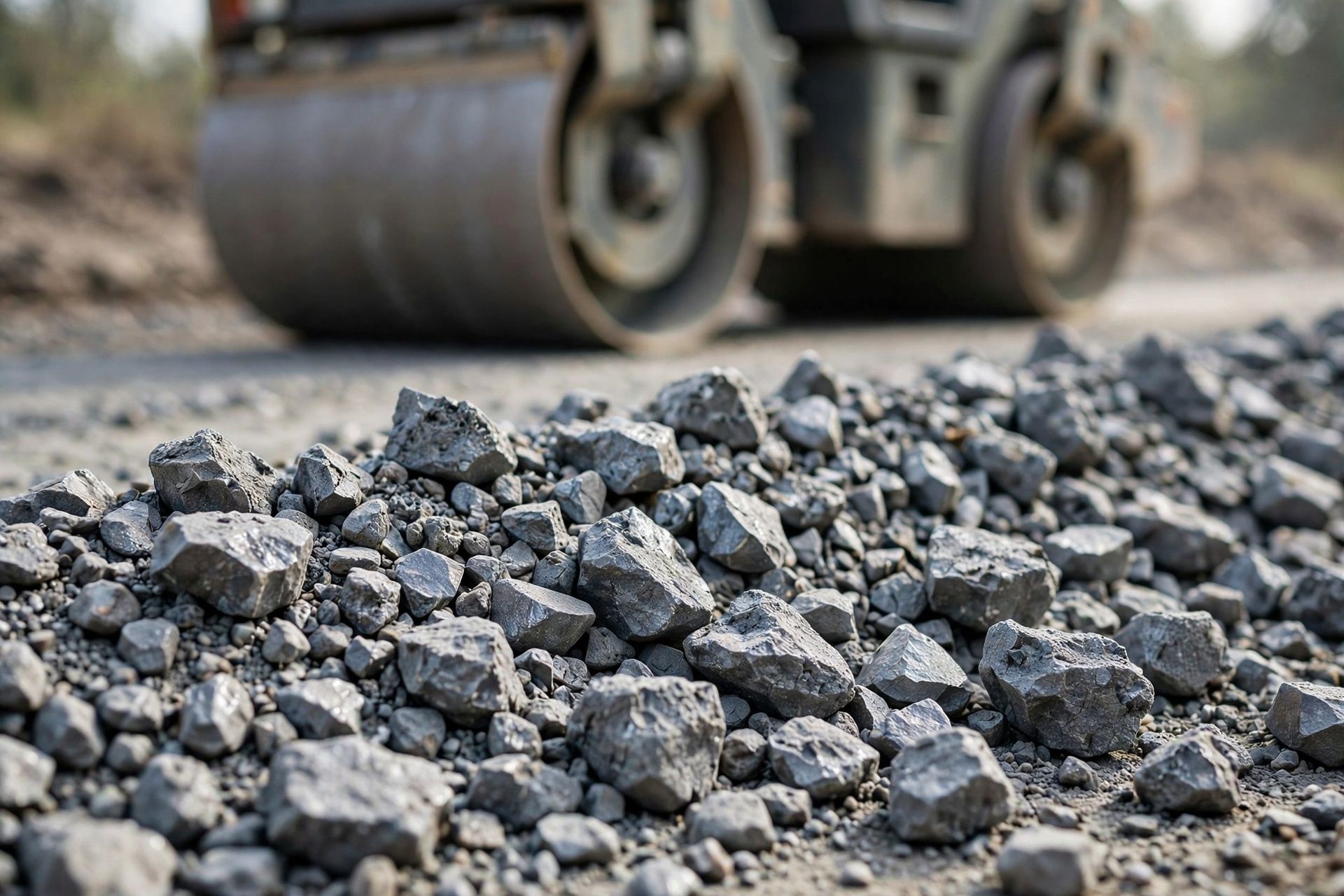
~149kt/yr
Electric-furnace slag at 1 Mt/yr (140 kg/t of liquid steel), recoverable as aggregate
Source
RC-1; IFC, EHS Guidelines for Integrated Steel Mills (2007), Table 4: arc-furnace solid waste 110 to 180 kg/t, mostly slag
~1.24Mt/yr
Indicative port arrivals at full capacity: imported metallics and consumables
Source
Cameroon Steel, reference configuration RC-1 (edition 10 Oct 2026): capacities × RC-1 planning assumptions (yields 0.88 and 0.94, 30% reduced iron, 30 t trucks, 300 days); planning estimate, not a design figure; imported DRI/HBI and scrap above domestic supply plus ~6% consumables
~245truckloads/day
Truckloads in and out at full capacity if everything moved by road (metallic charge and finished products; 30 t, 300 days/yr), before any rail siding
Source
Cameroon Steel, reference configuration RC-1 (edition 10 Oct 2026): capacities × RC-1 planning assumptions (yields 0.88 and 0.94, 30% reduced iron, 30 t trucks, 300 days); planning estimate, not a design figure
~94MW
Average power demand at 1 Mt/yr (≈ 753 GWh/yr), before furnace peaks
Source
Cameroon Steel, reference configuration RC-1 (edition 10 Oct 2026): capacities × electricity per tonne; arc furnace 450 kWh/t (IFC range 347 to 500) and rolling 110 kWh/t (IFC range 70 to 140), induction heating 300 kWh/t and auxiliaries 70 kWh/t (RC-1 assumptions); planning estimate, not a design figure
The diagnosis
The country imports billets first.
Chapter 72 import tonnage more than doubled between 2019 and 2025. The composition shows where the gap lies: by value, almost half is billets, the semi-finished product that feeds the country’s rolling mills.
kt
2019: 182,890 t; 2020: 278,981 t; 2021: 297,633 t; 2022: 283,589 t; 2023: 304,062 t; 2024: 309,682 t; 2025*: 412,049 t. * 2025: provisional figures.
Sourced INS Cameroun, Évolution du commerce extérieur, annual notes 2019 to 2025 (2025 provisional, Feb 2026). * 2025: provisional figures.
US$ m
Billets and semi-finished (HS 7207): 151.7 US$ m; Cold-rolled flat (HS 7209): 52 US$ m; Coated flat (HS 7210): 32.2 US$ m; Sections (HS 7216): 26.3 US$ m; Hot-rolled flat (HS 7208): 18.3 US$ m; Wire rod (HS 7213): 8.1 US$ m; Wire (HS 7217): 5.1 US$ m; Rebar and bars (HS 7214): 3.3 US$ m.
Billets were about 49% of the value of chapter 72 imports in 2023 (derived).
Sourced UN Comtrade public API, Cameroon (reporter 120), imports 2023, HS 72 and 6-digit lines
182,890t
Chapter 72 imports in 2019, against 412,049 t in 2025 (+125%)
Source
INS Cameroun, notes annuelles sur le commerce extérieur 2019 à 2025
ins-cameroun.cm/wp-content/uploads/2026/04/Note-sur-le-comme
161kt
Billets imported in 2023, the largest steel import (78% from Indonesia)
~1.2Mt/yr
Installed steel transformation capacity in Cameroon, running at about 50%: billets and scrap are scarce, and the press reports more than 30 billion FCFA of unsold stock (September 2026)
Source
Sikafinance, 30 Sep 2026; Camer.be, 1 Oct 2026; Cameroun24, 10 Oct 2026 (industry figures)
www.sikafinance.com/marches/cameroun-le-groupe-prometal-decr
~40%
Share of mill feedstock covered by local scrap; the rest is imported, mostly as billets
Source
Sikafinance, 30 Sep 2026; Cameroun24, 10 Oct 2026
cameroun24.net/article/76267-40-millions-d-euros-d-afreximba
31,033t
Bars exported by Cameroon in 2025 (HS 7214), mostly to Chad
Source
INS Cameroun, Évolution du commerce extérieur en 2025 (provisional); destinations: UN Comtrade 2023
ins-cameroun.cm/wp-content/uploads/2026/04/Note-sur-le-comme
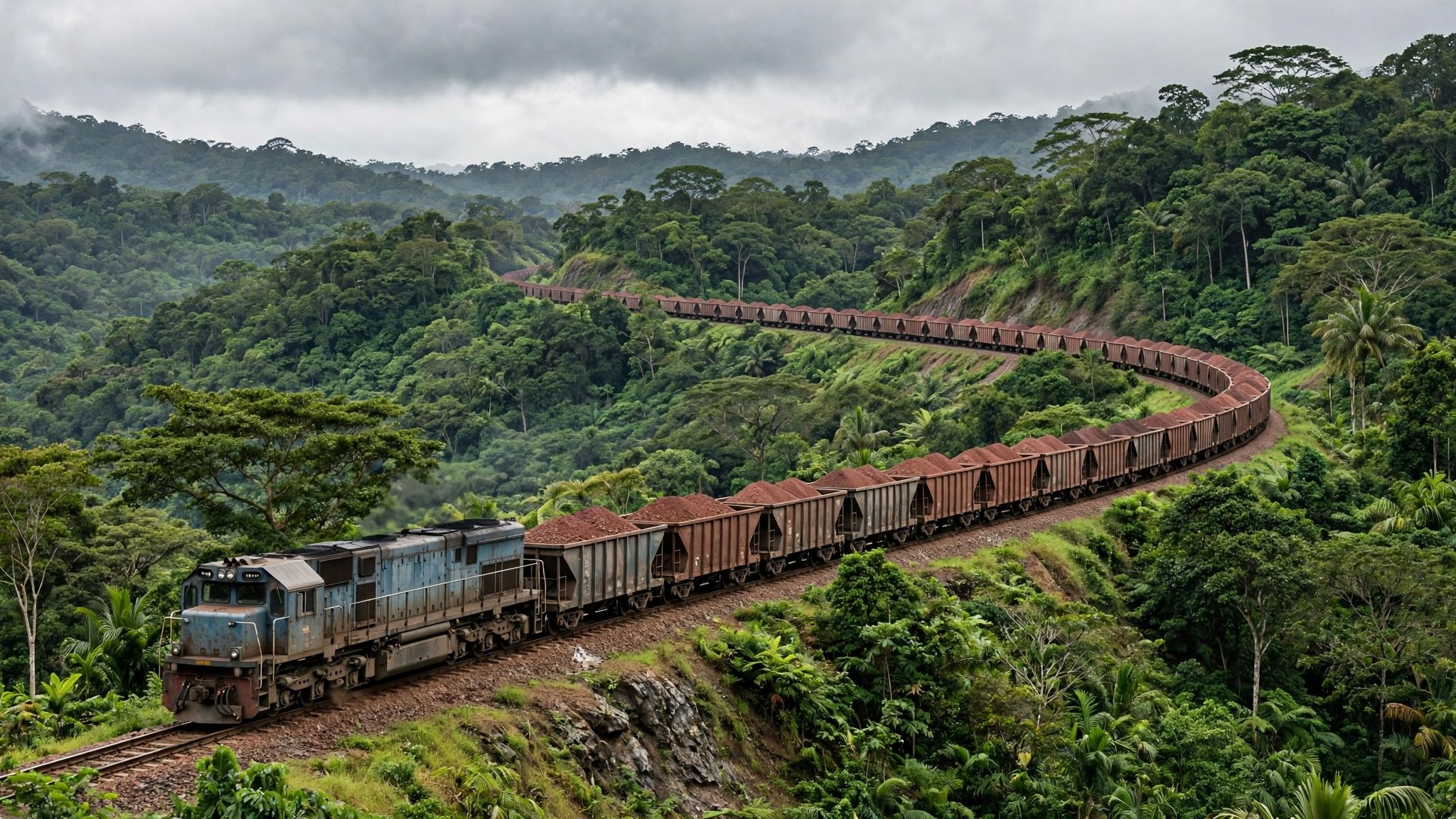
Where value is created
Value stays where matter changes state.
At every step, material gains value because it gains precision: chemistry, dimensions, mechanical properties, traceability. Importing billets means paying abroad for melting, refining and casting; importing beams means paying for the rolling too. Every link brought home keeps skilled jobs, foreign exchange and know-how in the country.
Order matters. Cameroon already rolls its own reinforcing bar; what is missing are the upstream links and the products nobody makes yet. That is the order in which Cameroon Steel plans to build: liquid steel and billets first, then sections and beams, and eventually iron from national ore.
15%
Minimum share of mine output for local processing (2023 Mining Code, art. 40(4))
Source
Loi n° 2023/014 du 19 décembre 2023 portant Code minier, art. 40(4)
15%
Share of Mbalam output that Cameroon Mining Company’s convention is reported to provide for local transformation; the same report presents Cameroon Steel as the future national steel hub of the Mbalam programme
Source
Camer.be via AllAfrica, « Cameroon Mining Company confirme l’entrée du projet Mbalam dans sa phase irréversible d’exécution », 12 Dec 2025
Go further
Go deeper into the value chain.
- InstitutionsImport substitution, foreign exchange, local transformation.
- SuppliersScrap, consumables, transport, maintenance.
- CustomersWhat the steelworks will make, and when.
- The processHow each step transforms the material.
White papers
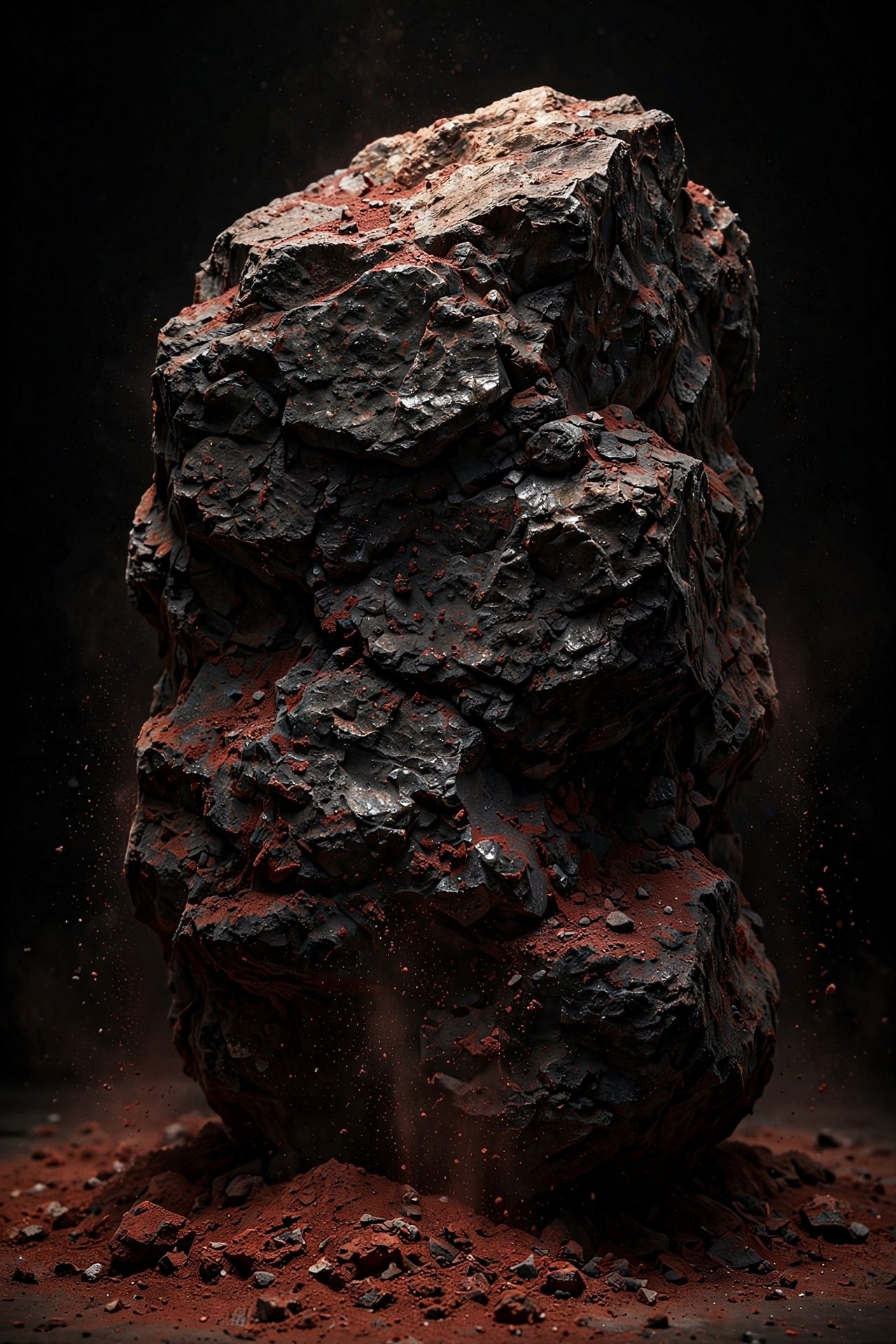
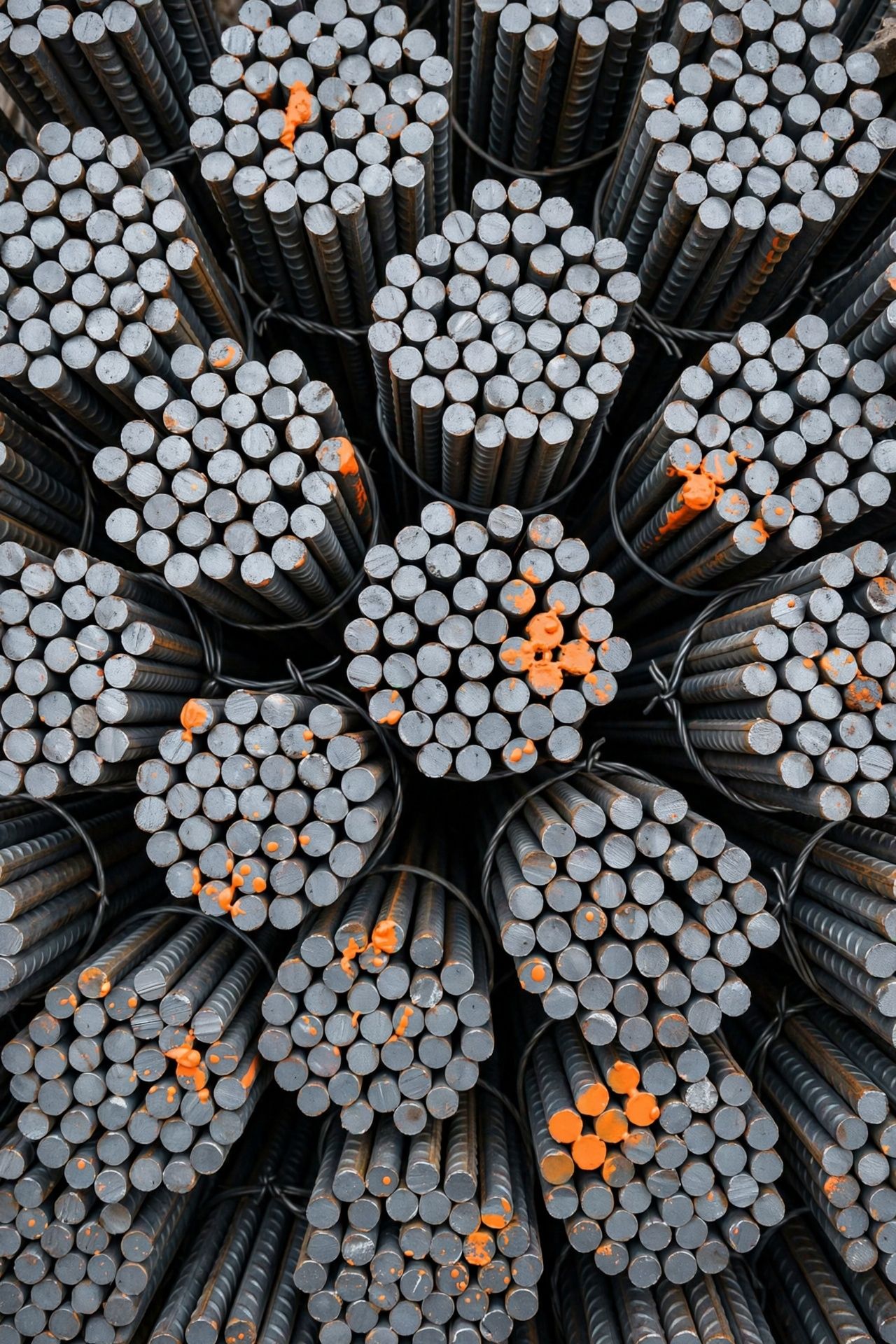
Visualisation Covers: computer-generated images that do not depict an existing facility.