An industrial project is judged by its actions. Here we separate what is already in place, what is in preparation and what remains an objective. At this stage of the project, most of our commitments are objectives: we would rather say so.
Each mark is one commitment. Hover it or reach it with the keyboard to read it; select it to open the full entry.Each mark is one commitment. Tap it to open the full entry.
What will prove it: Published frequency and severity rates
Safety · Objective
A certifiable health and safety management system
What will prove it: Certification targeted after commissioning
H2 2030 ISO 45001 certification targeted after commissioning
Environment · Objective
A detailed environmental and social impact assessment
What will prove it: Terms of reference, report, certificate
First half 2027 Terms of reference of the impact assessment
Late 2028 to Q1 2029 Certificate of environmental compliance, before any works
Environment · Objective
Baseline measurements over a full year
What will prove it: 12 months of data published in the impact assessment
2027–2028 Twelve months of baseline measurements
Environment · Objective
Site studies before any earthworks
What will prove it: Survey reports
First half 2027 Site survey reports
Environment · Objective
Emissions within international guideline limits
What will prove it: Published monitoring results
Environment · Objective
Recycle water and harvest rainfall
What will prove it: Water withdrawal per tonne published
Environment · Objective
Put slag to use rather than landfill it
What will prove it: Published reuse rate
Environment · Objective
Avoid, minimise, offset: the mitigation hierarchy
What will prove it: Biodiversity action plan
Climate · Objective
Measure and publish the carbon footprint of every tonne
What will prove it: t CO₂ per tonne, published annually
Climate · Objective
Low-carbon electricity supply
What will prove it: Published renewable share of electricity
Skills · Objective
Train before hiring
What will prove it: Published training hours and trainees
H2 2030 Training under way before commissioning
Skills · Objective
Positions held by Cameroonians, at every level
What will prove it: Published share of nationals by category
Skills · Objective
Open steel trades to women
What will prove it: Published share of women by category
Local participation · Objective
Local hiring first, at equal qualification
What will prove it: Published share of local jobs
Local participation · Objective
A supplier development programme
What will prove it: Share of purchases from Cameroonian firms
Communities · In preparation
A stakeholder engagement plan
What will prove it: Published plan, meeting register
2027–2028 Public consultations and hearings
Communities · In preparation
An accessible grievance mechanism
What will prove it: Published response times and resolution rate
Late 2028 to Q1 2029 Grievance mechanism in place before works begin
Communities · Objective
Respect for Indigenous peoples
What will prove it: Dedicated plan if Performance Standard 7 applies
Communities · Objective
Protect the health and safety of neighbours
What will prove it: Published road-safety and incident indicators
Transparency · In place
Computer-generated images are labelled as such
What will prove it: “Visualisation” label on every such image
Transparency · In place
A series of public, sourced white papers
What will prove it: Online library
10 Oct 2026 Ten sourced white papers, online
Transparency · In preparation
Every published figure with its status and source
What will prove it: Status chips and source lines on every page; the source register
Transparency · Objective
An annual sustainability report
What will prove it: Report published each year
Late 2028 to Q1 2029 Annual report, from the start of works
Each mark is one commitment. Hover it or reach it with the keyboard to read it; select it to open the full entry.Each mark is one commitment. Tap it to open the full entry.
Safety 2
Environment 7
Climate 2
Skills 3
Local participation 2
Communities 4
Transparency 4
The next dated proofs
Verified
10 Oct 2026
Ten white papers published
Ten sourced white papers, online
Objective
First half 2027
Site surveys and environmental scoping
Site survey reports
Terms of reference of the impact assessment
Objective
2027–2028
Two-season impact study and public hearings
Twelve months of baseline measurements
Public consultations and hearings
Objective
Late 2028 to Q1 2029
Financing, then start of Phase 1 works after the environmental certificate
Certificate of environmental compliance, before any works
Grievance mechanism in place before works begin
Annual report, from the start of works
Objective
H2 2030
Phase 1: first heat
Training under way before commissioning
ISO 45001 certification targeted after commissioning
Dates after 10 October 2026 are objectives of the reference schedule; they may move with permits, engineering, market and financing.
The commitment field
The warmer the colour, the more advanced the commitment.
Each tile is a commitment. Filter by theme or status, and open a tile to read what it covers and how it will be measured.
Transparency · In preparation
Every published figure with its status and source
The key figures on this site are already labelled sourced, reported, derived, assumption or illustrative, with their source. We are extending the rule to figures quoted in running text, page by page.
How we will measure it: Status chips and source lines on every page; the source register
Transparency · In place
Computer-generated images are labelled as such
No computer-generated image is presented as a photograph of existing facilities.
How we will measure it: “Visualisation” label on every such image
Transparency · In place
A series of public, sourced white papers
Ten studies set out the market, technology, energy, climate, environment, skills and quality, with their sources.
How we will measure it: Online library
Environment · Objective
A detailed environmental and social impact assessment
Conducted under framework law No. 96/12 and Decree No. 2013/0171/PM, with public hearings, and aligned with the IFC Performance Standards. The certificate of environmental compliance will be obtained before any works begin.
How we will measure it: Terms of reference, report, certificate
Environment · Objective
Baseline measurements over a full year
On-site meteorology and air quality, water, noise and biodiversity, across dry and wet seasons, before final design.
How we will measure it: 12 months of data published in the impact assessment
Communities · In preparation
A stakeholder engagement plan
Information and consultation of neighbouring villages, fishers, traditional authorities and institutions, in appropriate languages, at every stage of the project.
How we will measure it: Published plan, meeting register
Communities · In preparation
An accessible grievance mechanism
Several channels, free of charge and free from reprisal, with published response times and tracking of every grievance.
How we will measure it: Published response times and resolution rate
Environment · Objective
Site studies before any earthworks
Topographic, geotechnical and hydrological surveys, census of any land uses and heritage.
How we will measure it: Survey reports
Safety · Objective
Zero serious injury, as a design requirement
Hazard analysis from design (liquid metal, electricity, lifting, oxygen), lock-out, permits to work, protective equipment and a reporting culture.
How we will measure it: Published frequency and severity rates
Safety · Objective
A certifiable health and safety management system
A system in line with ISO 45001, applied to contractors too.
How we will measure it: Certification targeted after commissioning
Environment · Objective
Emissions within international guideline limits
Electric-furnace fume capture and baghouse filters, continuous monitoring, in line with the IFC EHS Guidelines for steel.
How we will measure it: Published monitoring results
Environment · Objective
Recycle water and harvest rainfall
Closed cooling circuits and rainwater harvesting, in a region that receives about 2,800 mm a year.
How we will measure it: Water withdrawal per tonne published
Environment · Objective
Put slag to use rather than landfill it
Electric-furnace slag, after weathering and leach testing, can be used as road aggregate; furnace dust is managed as hazardous waste.
How we will measure it: Published reuse rate
Environment · Objective
Avoid, minimise, offset: the mitigation hierarchy
Fauna and flora surveys in all seasons, a landscaped green belt, and no net loss wherever natural habitat would be affected.
How we will measure it: Biodiversity action plan
Climate · Objective
Measure and publish the carbon footprint of every tonne
Annual Scope 1 and 2 inventory under ISO 14404 and the GHG Protocol, independently verified.
How we will measure it: t CO₂ per tonne, published annually
Climate · Objective
Low-carbon electricity supply
Priority to hydro and renewable electricity, and energy efficiency in furnaces and mills.
How we will measure it: Published renewable share of electricity
Skills · Objective
Train before hiring
An on-site training centre and partnerships with Cameroonian technical schools and universities, to prepare steelworks trades before commissioning.
How we will measure it: Published training hours and trainees
Skills · Objective
Positions held by Cameroonians, at every level
Transfer of skills from foreign technical assistance to national teams, with a succession plan for each position.
How we will measure it: Published share of nationals by category
Skills · Objective
Open steel trades to women
Active recruitment and training, suitable working conditions, prevention of harassment.
How we will measure it: Published share of women by category
Local participation · Objective
Local hiring first, at equal qualification
Priority recruitment in the Kribi area, then across Cameroon, at equivalent qualification and cost.
How we will measure it: Published share of local jobs
Local participation · Objective
A supplier development programme
Transparent tenders, and support for Cameroonian SMEs to meet industry quality and safety requirements.
How we will measure it: Share of purchases from Cameroonian firms
Communities · Objective
Respect for Indigenous peoples
Should Bagyeli or Bakola communities be affected, culturally appropriate consultation and the pursuit of their free, prior and informed consent.
How we will measure it: Dedicated plan if Performance Standard 7 applies
Communities · Objective
Protect the health and safety of neighbours
Truck traffic plan, dust reduction, malaria and disease prevention, emergency preparedness with Kribi services.
How we will measure it: Published road-safety and incident indicators
Transparency · Objective
An annual sustainability report
Annual publication of safety, environment, employment and local-content indicators, from the start of works.
How we will measure it: Report published each year
Six domains, one principle
What can be measured will be measured and published.
Safety
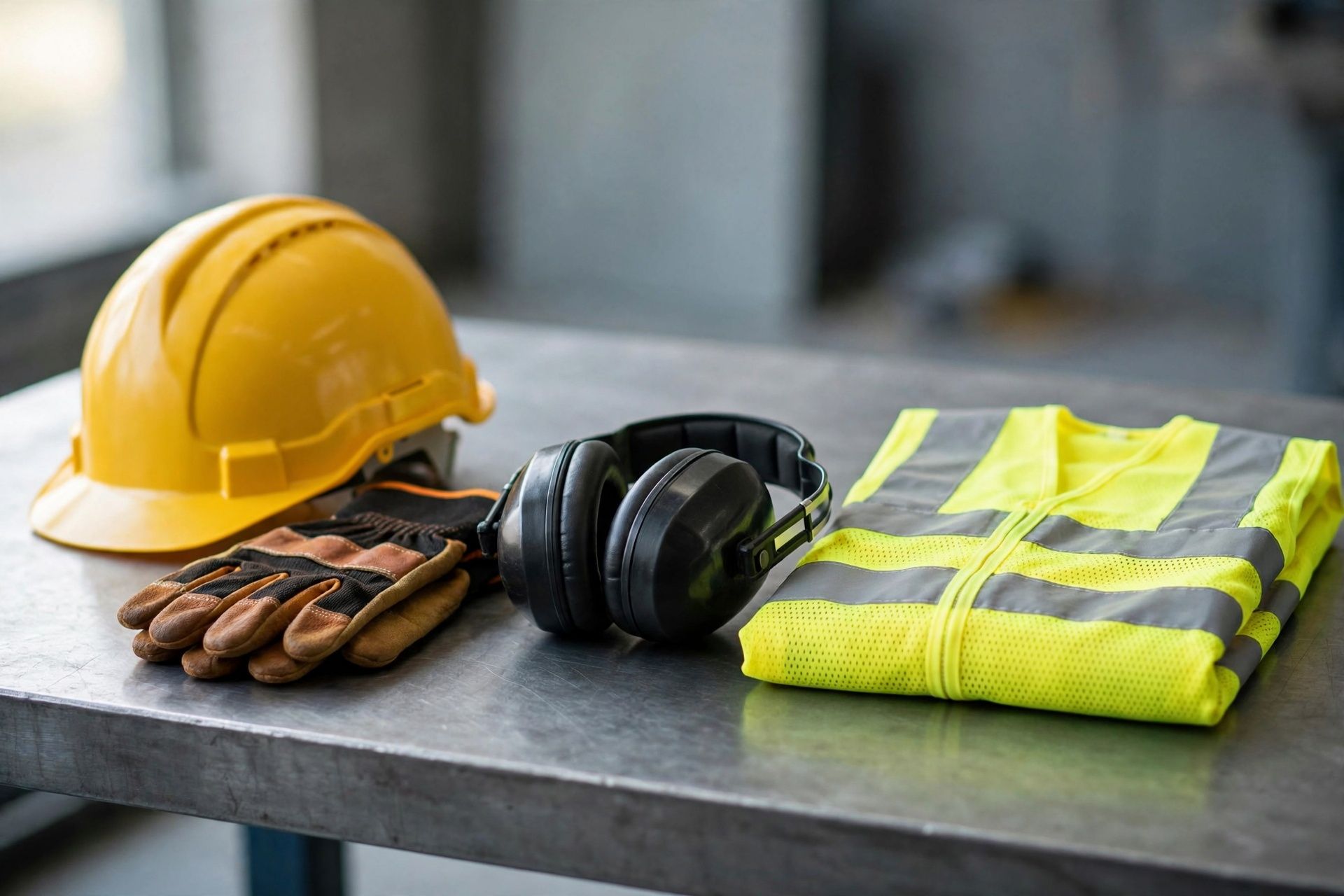
In a steelworks, liquid metal, electrical energy and heavy loads are unforgiving. Safety is designed into the plans before it is practised at every workstation.
Visualisation
Objective
Zero serious injury, as a design requirement
Hazard analysis from design (liquid metal, electricity, lifting, oxygen), lock-out, permits to work, protective equipment and a reporting culture.
How we will measure it: Published frequency and severity rates
Objective
A certifiable health and safety management system
A system in line with ISO 45001, applied to contractors too.
How we will measure it: Certification targeted after commissioning
Environment
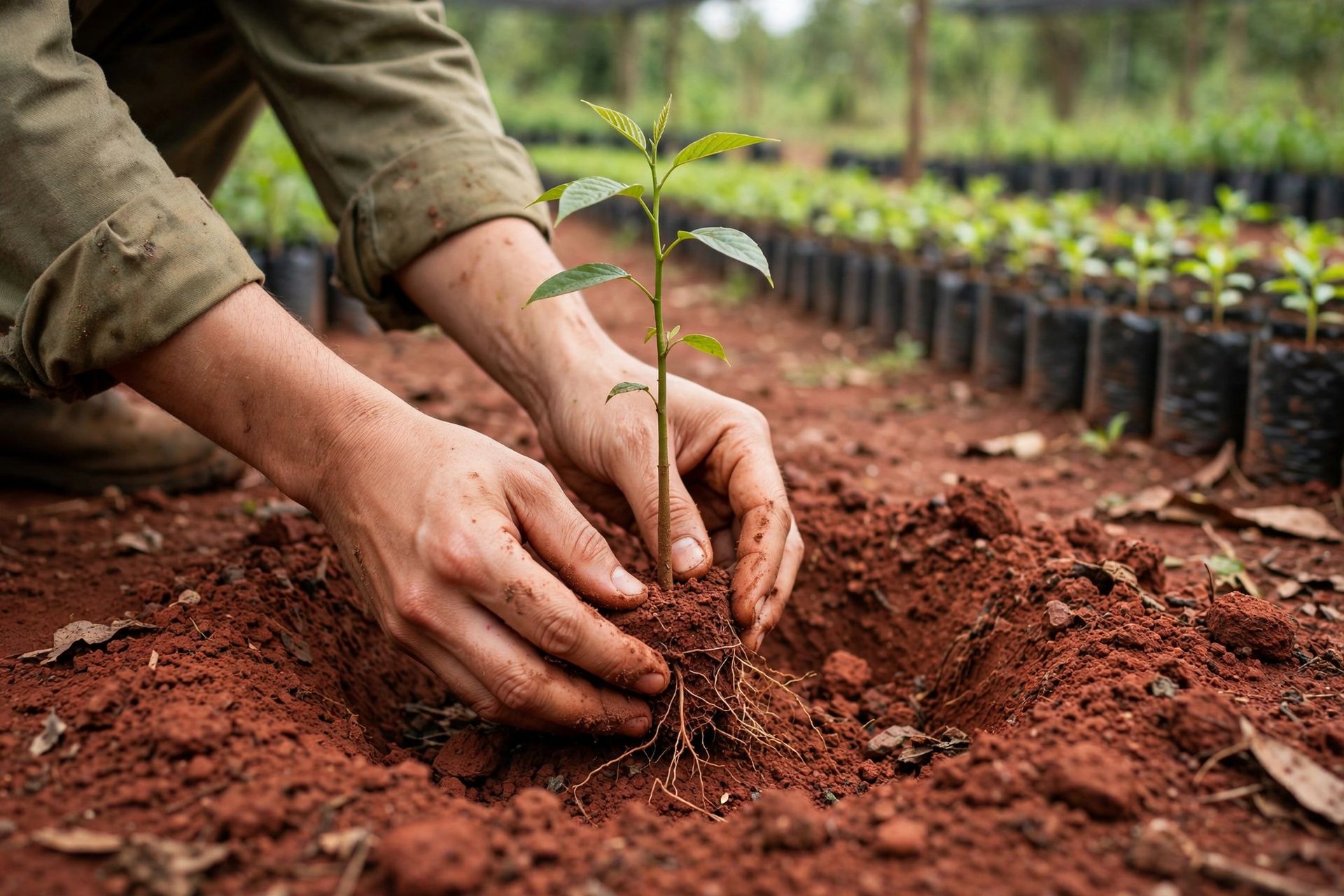
Air, water, soil, waste and biodiversity: Kribi is a living coastline. The project is subject to a detailed impact assessment and applies the sector’s international guidelines.
Visualisation
Objective
A detailed environmental and social impact assessment
Conducted under framework law No. 96/12 and Decree No. 2013/0171/PM, with public hearings, and aligned with the IFC Performance Standards. The certificate of environmental compliance will be obtained before any works begin.
How we will measure it: Terms of reference, report, certificate
Objective
Baseline measurements over a full year
On-site meteorology and air quality, water, noise and biodiversity, across dry and wet seasons, before final design.
How we will measure it: 12 months of data published in the impact assessment
Objective
Site studies before any earthworks
Topographic, geotechnical and hydrological surveys, census of any land uses and heritage.
How we will measure it: Survey reports
Objective
Emissions within international guideline limits
Electric-furnace fume capture and baghouse filters, continuous monitoring, in line with the IFC EHS Guidelines for steel.
How we will measure it: Published monitoring results
Objective
Recycle water and harvest rainfall
Closed cooling circuits and rainwater harvesting, in a region that receives about 2,800 mm a year.
How we will measure it: Water withdrawal per tonne published
Objective
Put slag to use rather than landfill it
Electric-furnace slag, after weathering and leach testing, can be used as road aggregate; furnace dust is managed as hazardous waste.
How we will measure it: Published reuse rate
Objective
Avoid, minimise, offset: the mitigation hierarchy
Fauna and flora surveys in all seasons, a landscaped green belt, and no net loss wherever natural habitat would be affected.
How we will measure it: Biodiversity action plan
Climate
The electric route on a hydro-dominated grid is a lower-carbon choice. It still has to be measured, verified and published.
Objective
Measure and publish the carbon footprint of every tonne
Annual Scope 1 and 2 inventory under ISO 14404 and the GHG Protocol, independently verified.
How we will measure it: t CO₂ per tonne, published annually
Objective
Low-carbon electricity supply
Priority to hydro and renewable electricity, and energy efficiency in furnaces and mills.
How we will measure it: Published renewable share of electricity
Skills
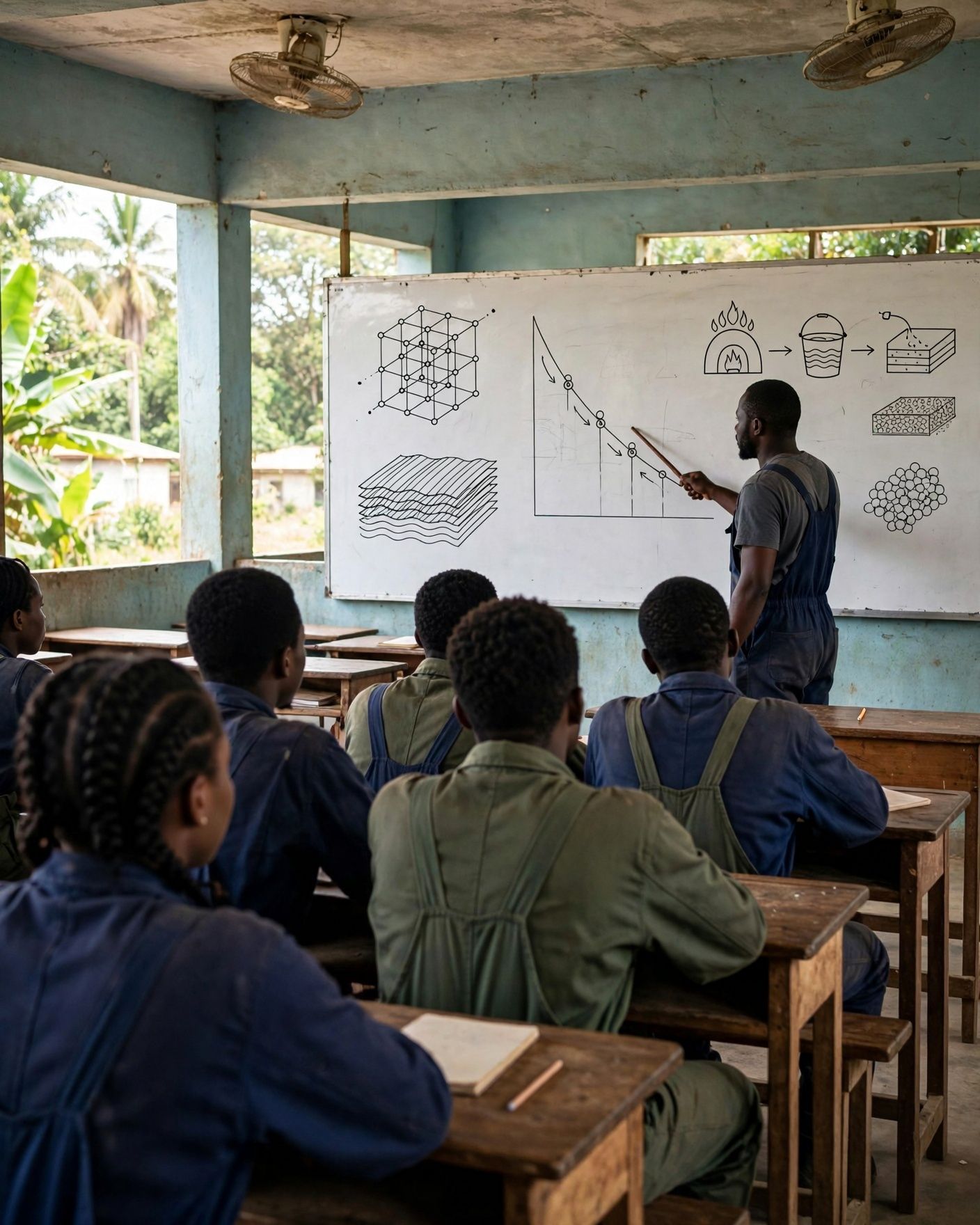
A steelworks is built with technicians, operators and engineers. Training ahead of time secures skilled jobs for young Cameroonians.
Visualisation
Objective
Train before hiring
An on-site training centre and partnerships with Cameroonian technical schools and universities, to prepare steelworks trades before commissioning.
How we will measure it: Published training hours and trainees
Objective
Positions held by Cameroonians, at every level
Transfer of skills from foreign technical assistance to national teams, with a succession plan for each position.
How we will measure it: Published share of nationals by category
Objective
Open steel trades to women
Active recruitment and training, suitable working conditions, prevention of harassment.
How we will measure it: Published share of women by category
Local participation
Transport, maintenance, construction, catering, services: a plant sustains a fabric of businesses. We want it to be Cameroonian first.
Objective
Local hiring first, at equal qualification
Priority recruitment in the Kribi area, then across Cameroon, at equivalent qualification and cost.
How we will measure it: Published share of local jobs
Objective
A supplier development programme
Transparent tenders, and support for Cameroonian SMEs to meet industry quality and safety requirements.
How we will measure it: Share of purchases from Cameroonian firms
Communities
Fishers, farmers, neighbouring villages, Indigenous peoples: trust is built through listening, information and commitments kept.
In preparation
A stakeholder engagement plan
Information and consultation of neighbouring villages, fishers, traditional authorities and institutions, in appropriate languages, at every stage of the project.
How we will measure it: Published plan, meeting register
In preparation
An accessible grievance mechanism
Several channels, free of charge and free from reprisal, with published response times and tracking of every grievance.
How we will measure it: Published response times and resolution rate
Objective
Respect for Indigenous peoples
Should Bagyeli or Bakola communities be affected, culturally appropriate consultation and the pursuit of their free, prior and informed consent.
How we will measure it: Dedicated plan if Performance Standard 7 applies
Objective
Protect the health and safety of neighbours
Truck traffic plan, dust reduction, malaria and disease prevention, emergency preparedness with Kribi services.
How we will measure it: Published road-safety and incident indicators
Accountability
An annual report, from the start of works.
Safety, environment, climate, employment, local content and communities: indicators will be published every year, with their method. Shortfalls will be explained, not hidden.
Domain
Published indicator
Reference
Safety
Accident frequency and severity rates
ISO 45001, IFC EHS Guidelines
Air
Dust concentrations at stacks and at the site boundary